Amazon Affiliate - The Definitive Guide

The Amazon Affiliate program has been around for nearly 20 years, and it is still the one we recommend most to affiliate marketers who are just getting started. So, after years supporting thousands of Amazon Associates across three platforms, we've gathered what we think is some of the most important information and have distilled it into this definitive guide.
What we'll cover
Chapter 1 - What is the Amazon Affiliate Program?
- Learn what affiliate marketing is and the basics of how it works.
- Get a glimpse at the largest affiliate program in the world, Amazon's Associate's program.
- See the things that set Amazon's affiliate program apart from the rest.
What is affiliate marketing?
Before we dive into what the Amazon affiliate program is, we should probably start with the question "What is affiliate marketing?" in general.
The gist is that an affiliate marketing program is a way for a brand or retailer to track referrals, sales, and/or certain actions and reward those who are responsible for doing so.
When I was working at Apple as the Global Program Manager of the iTunes Affiliate Program, I described our affiliate program to my marketing peers as an "infrastructure to facilitate partnerships."
This process typically involves three major pieces -- the brand or retailer (Amazon in this case), the person referring the shoppers (this is likely you), and the way they do this (a specialized tracking link is often used).
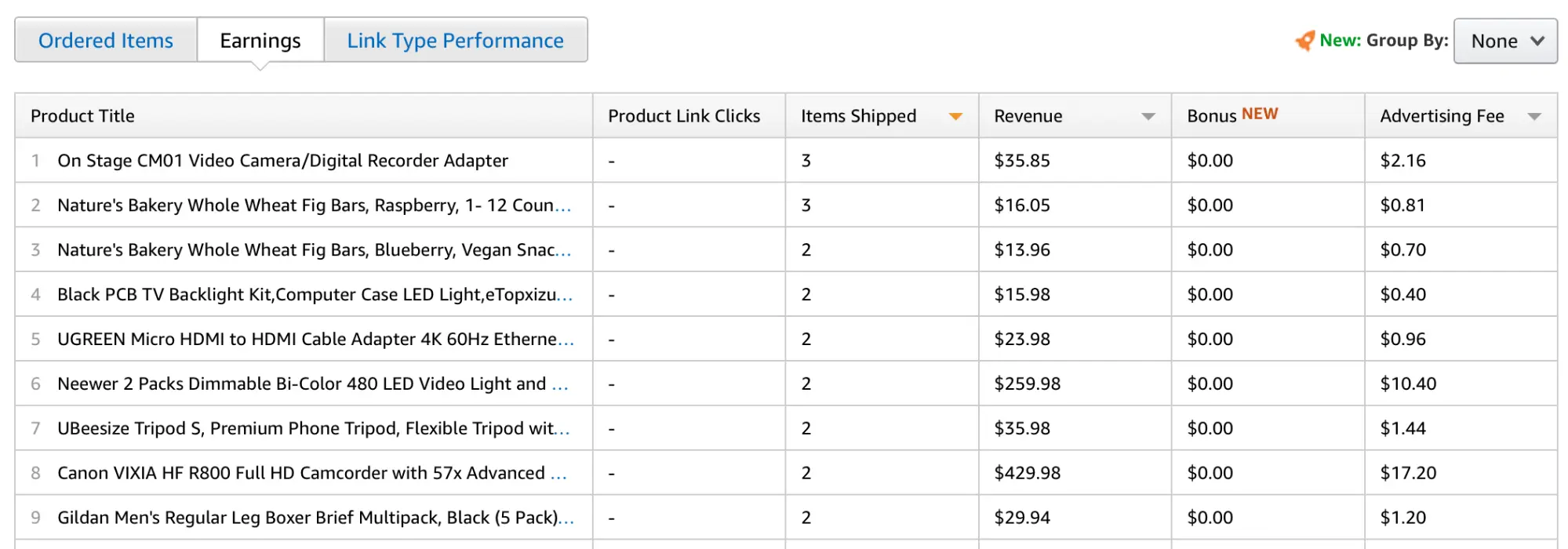
The way things would work is that you, with a website, app, and/or social media channel, make a recommendation about a product or service, adding insights and value into the buying process for your community, and then follow that up with a specialized affiliate tracking link. Your audience -- the shopper -- will then review your insights, and if they are moved, will click on that link, be taken to the retailer, and ideally buy the product or service you recommended. The retailer will then see the sale was referred by you, within a certain timeframe of the click, and then credit you for the sale at a predefined rate.
Ideally, this process repeats itself again and again, and with this success, you expand the recommendations and insights you provide to support a growing audience. Everyone wins -- the shoppers get unique and additional insights, you get rewarded for your time and effort, and the retailer is making additional sales it may not have made otherwise.
This simplification of the process ignores the sign-up, set-up, and payment aspects of the affiliate program. While those are important, they are administrative tasks that aren't as interesting. More details on those will follow.
Besides the specific brand or retailer they support, the two biggest factors that differentiate an affiliate program are the commission rates they pay out (often as percentage of the sales price) and how long the shopper has between clicking your link and making the purchase (often called the "cookie window").
Where does the Amazon affiliate program fit in?
Amazon's affiliate program, officially known as "Amazon Associates," is very similar to the tens of thousands of other affiliate programs out there and follows the model laid out above. In general, for sending qualified shoppers into the Amazon store via a specialized link, you will be rewarded with a commission on sales.

A few differences to note include: Amazon doesn't call the rewards "commissions," opting instead for "Fees" and "Bounties." They also refer to you, traditionally referred to as an "affiliate publisher," as an "Associate."
Additionally, Amazon's affiliate program does not use an affiliate network, a third-party service that often provides the tracking and reporting services to both the retailer/brand and the publisher. Amazon's affiliate program is internal.
Traditionally, the specialized affiliate tracking link for an affiliate program is long and ugly, as it includes multiple parameters and additional information necessary to make one or more redirects. However, since Amazon's affiliate program doesn't use an affiliate network, there is only a minor difference between a link you'd see in your browser while on the Amazon site and an affiliate link. That difference is the inclusion of the parameter "tag" followed by some characters that end with "-20" for Amazon.com.
Normal link: https://www.amazon.com/Martian-Andy-Weir/dp/0553418025/
Affiliate link: https://www.amazon.com/Martian-Andy-Weir/dp/0553418025/?tag=geniuslink-20
Amazon's affiliate program, like the majority of today's affiliate programs, uses the "last click attribution" model. This means the Associate -- aka the affiliate publisher, aka you -- who sends a shopper to Amazon is only rewarded if they are the last one to do so. If, for example, you send a shopper to Amazon, but before they leave, go to another site and read another review then click on another affiliate link, you lose out on the opportunity to earn a commission. While that other affiliate link, the last click before the purchase, will get credit for the sale.
Another way to lose out on commissions is for the "cookie window" to expire. The cookie window is the time Amazon allows for a sale to happen and still be credited to you. Amazon's affiliate program has a pretty tight window of 24 hours. So if someone clicked on your link, didn't click on any other affiliate links but waited 25 hours before they bought, you would miss out on the referral credit. Other programs can be much longer. Walmart, for example, offers 72 hours.
However, it's important to note that Amazon's cookie window isn't a measure of click-to-purchase but rather click-to-cart. As long as the product is moved to the cart within the 24 hours, then purchased and shipped within 89 days, you'll earn that commission. This gives some extra flexibility, but also can create some confusion in your earnings later down the road.
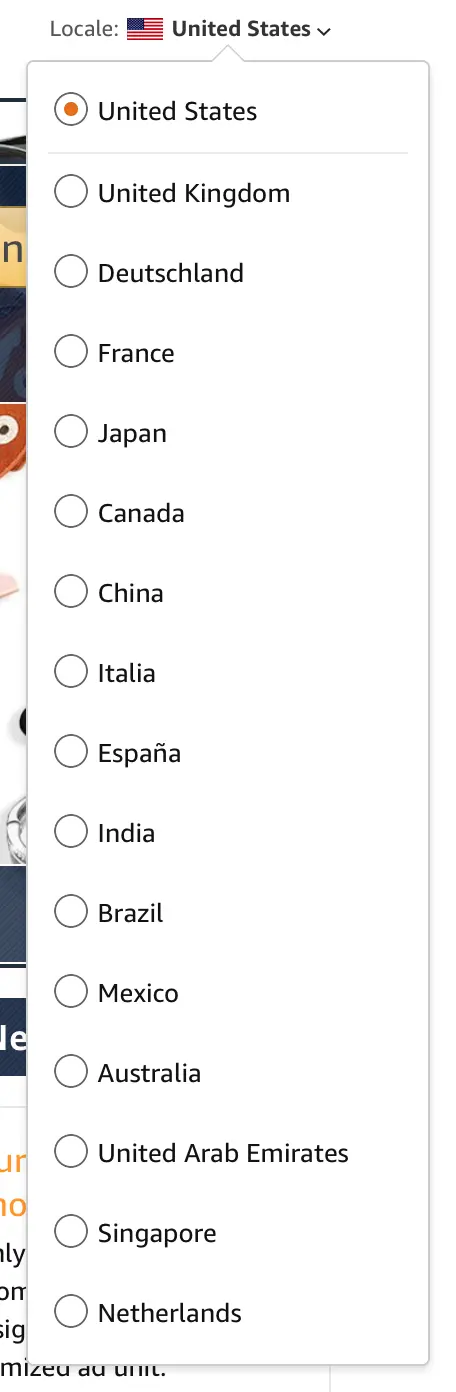
Finally, it's important to note that the Amazon affiliate program, while often referred to as a single entity, is actually a collection of 15 independent and storefront-specific affiliate programs. Just as Amazon has different storefronts for different parts of the world (eg. Amazon.ca for Canada and Amazon.co.jp for Japan), each of these storefronts have their own affiliate program to support that specific store. Unfortunately, you can't earn commissions from the Canadian Amazon store using the Amazon.com affiliate program. This is an important consideration when you have a global audience, and we'll dig in more later during the best practices section.
What sets the Amazon affiliate program apart?
There are three major benefits of using Amazon's affiliate program. While all three are related, the major benefits include the program being easy to get started with, being fairly easy to use, and the relatively high conversion rates.
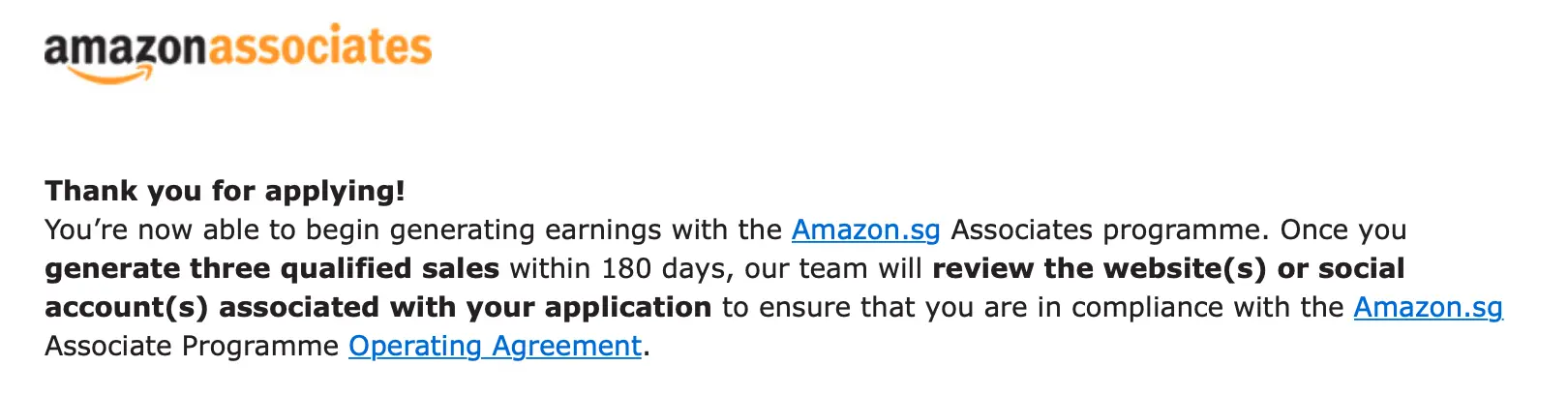
The Amazon affiliate program is easy to launch because it doesn't require the additional step of using an affiliate network, the optimized dashboard and the minimal barriers to start using the program. In fact, unlike many affiliate programs, Amazon doesn't actually review your site until you've generated three sales. In comparison, multiple affiliate programs require you to verify your website or social media channel or pay some nominal fee before you can even apply to a specific affiliate program.
The same factors that make the Amazon affiliate program easy to start also make it easy to use. However, because of it's huge size, there are a huge number of resources available as well. This includes educational resources, how-to guides, and easier access to experts (or at least those with experience who are happy to share). This also includes a sizable ecosystem of third-party tools and plugins that provide significant functionality "out of the box." This makes creating a fairly sophisticated setup fairly simple by combining various tools in the proper manner.
Additionally, the Amazon affiliate program typically has a fairly high conversion rate. Of course this varies widely by your site or channel, the products you recommend, and your audience, but the Amazon program offers three advantages.
First, in the U.S., a huge number of people are comfortable shopping online with Amazon. EMarketer pegs their market share at 38%, far ahead of many of its other ecommerce competitors (for example, Walmart is in the 4%-5% range). This familiarity with Amazon -- and even better, having an Amazon Prime membership -- means once you get a shopper into the Amazon store, your odds are high compared to sending a shopper to a store they've never used before.
Second, Amazon has a massive product catalog. Amazon is the "everything store," and you can find pretty much anything for sale. This allows you to recommend very specific products your niche would appreciate. Or better yet, you can compare your preferred product to a few of the competing products to add even more value to the buying experience.
Finally, Amazon will, in most cases, pay you a commission for everything that is bought by the shopper you refer. This combines the prior points, but because so many people are familiar with Amazon and because you can buy so many different products, many affiliate publishers will find that while they may be recommending a specific TV, for example, they are actually earning commissions from sales of toilet paper and toasters because shoppers they recommended needed to buy those products anywhere, and happen to do so while inside of your cookie window. The earnings from the products sold that you didn't recommend are called "Halo commissions," and Amazon is notorious for these.
History
Amazon was not the innovator of online affiliate marketing, even though they are one of the earlier pioneers. The Amazon affiliate program launched in July 1996, making it nearly a quarter of a century old. In that time, from our calculations, it has become the largest affiliate program in the world, with millions of affiliate publishers placing their specialized links across the internet to referrer shoppers into Amazon's massive store. Amazon's affiliate program was also an instrumental piece of their early growth. One report claims 40% of sales in 2008 came from the Associates program!
Chapter 2 - How to Become an Amazon Affiliate

- Clear direction on how to get started with Amazon's affiliate program.
- The details on getting signed up for your first Amazon affiliate program.
- Best practices for signing up for international Amazon affiliate programs.
Getting set up with the Amazon affiliate program is fairly easy to do and shouldn't take more than half an hour. If you already have a site or community, then I encourage you to dive right into the next section and ignore the following few paragraphs.
However, if you are just starting out and don't yet have a website, a channel or an audience, then hear me out for a moment.
There are two schools of thought here. One is to build a community first, THEN start to monetize it via the Amazon affiliate program. The second is to sign up for the Amazon affiliate program very early in the process to ensure no penny is lost.
If you are brand new to all of this, then I would encourage you to take the first path and start working on building your site and community first before worrying about monetizing your efforts. I say this for a few reasons:
- While seeing the fiscal upside of your project can be incredibly rewarding, it can also be very distracting and disheartening early on if you are not seeing any commissions or clicks coming through. I would recommend you focus first on your craft and spend some time building whatever it is you plan on building. Once you've started to put out some content, started to get some engagement and proven to yourself that you don't hate working on the project, then it's time to start monetizing -- not before.
- Amazon doesn't review your account until you've generated three sales, and you have 180 days to do so. If you fail to do this within that time frame, you risk having your account closed, which renders your previous affiliate links worthless and creates added work once you get a new account set up.
- Amazon recently changed how you can access their Product Advertising API, the tool that is essential for some of the more interesting WP plugins and related tools (but not Geniuslink). Before this change, it was beneficial to get signed up with the program as soon as possible to get access to the PA API, but with this change there is no difference.
Which Amazon affiliate program should I sign up for first?
Now that you are ready to dive in and get signed up for the Amazon affiliate program, you need to decide which program to start with -- remember there are now 15 independent Amazon affiliate programs!
The question is easily answered by going to the analytics of your project and seeing where the majority of your audience is coming from. If most of your visitors are coming from the United States, then you want to start off with the Amazon.com affiliate program. However, if the bulk of your audience is coming from India, then Amazon.in's affiliate program makes more sense.
Ultimately, you'll want to sign up for all of the Amazon affiliate programs that match the countries where you see at least 1% of your site's, or channel's, traffic. We'll cover this further in the best practices section later.
It's important to note you are not necessarily signing up for the Amazon affiliate program that matches the Amazon store you use or the country you live in. Rather you are signing up for the program that matches the store and country where the bulk of your traffic is from. It's a nuanced distinction but vitally important in ensuring your initial efforts are as fruitful as possible.
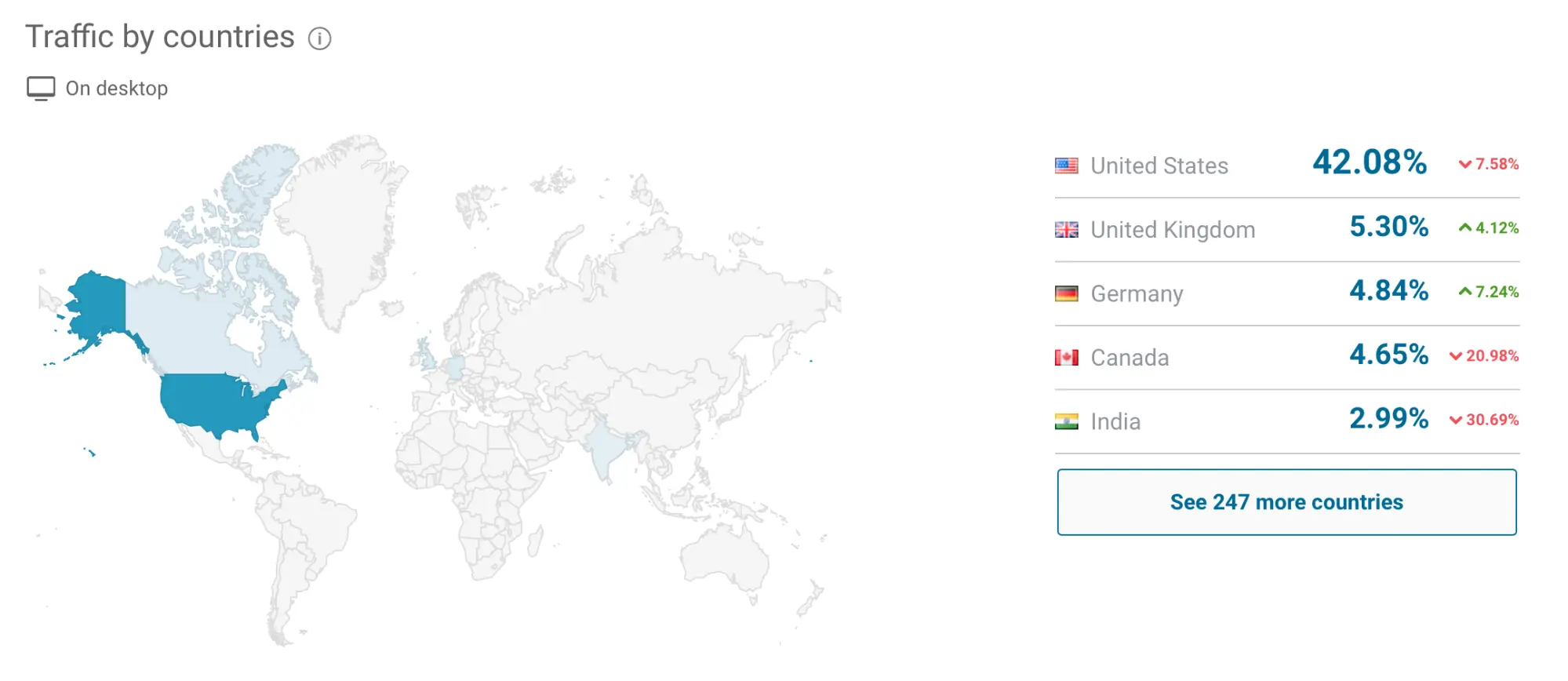
Finally, it's important to note that for the majority of the Amazon affiliate programs, you can sign up from -- and get paid from -- anywhere in the world. This means if you are based in Mexico but see most of the traffic on your YouTube channel is from the US, you'd want to initially sign up for the Amazon.com affiliate program.
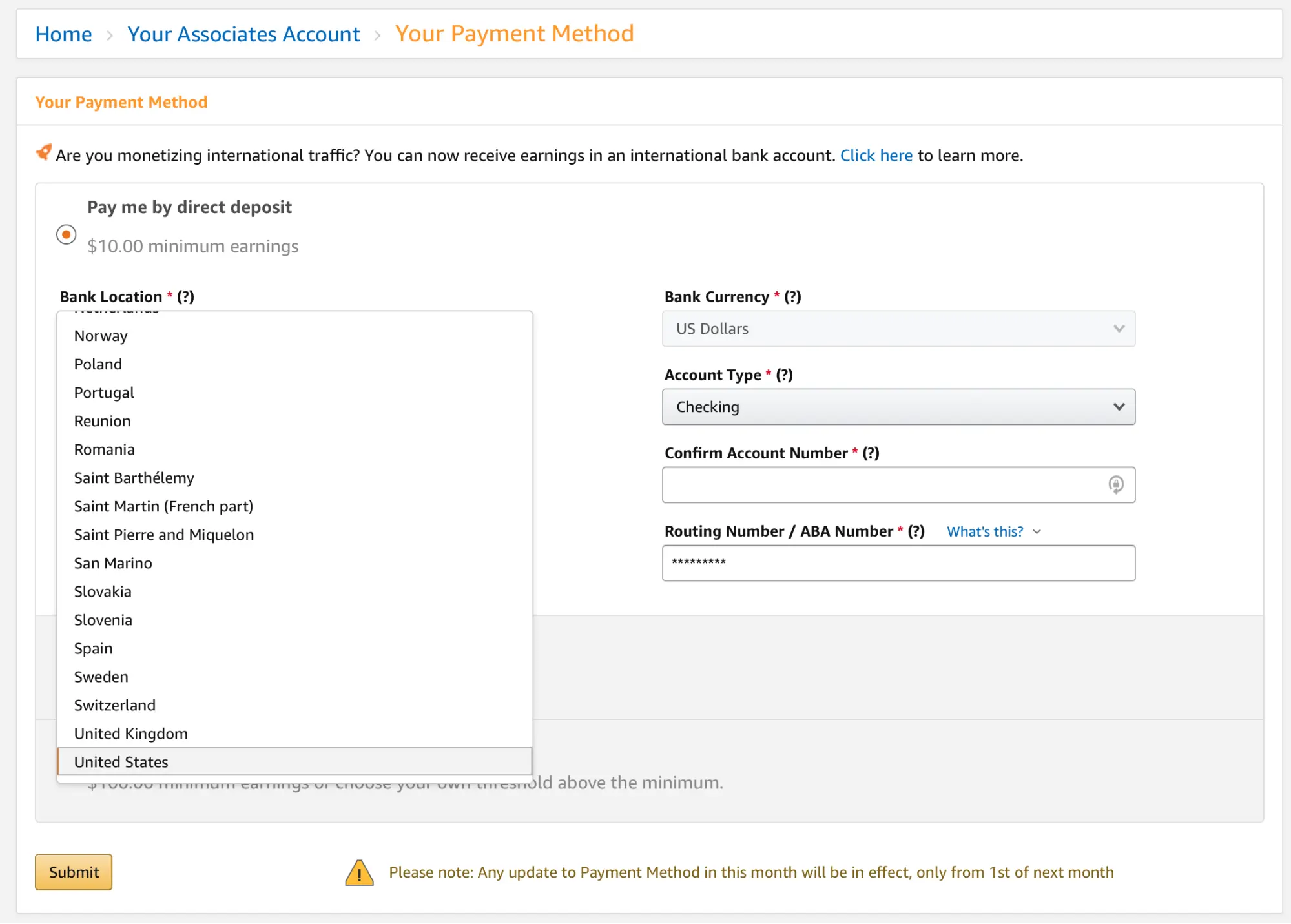
You can easily jump between the region-specific Amazon affiliate programs via the drop down in the upper right of any Amazon Associates Central dashboard.
Signing up for the Amazon affiliate program
Once you've narrowed down which Amazon affiliate program you want to start with, it's time to dig in. I won't guide you step-by-step through the sign-up process, as I've done that in multiple places before. If you want a video walk through, please check out our recorded webinar on YouTube. We also have a step-by-step guide in our Knowledge base to help you out.
A few things to consider as you are signing up for the program:
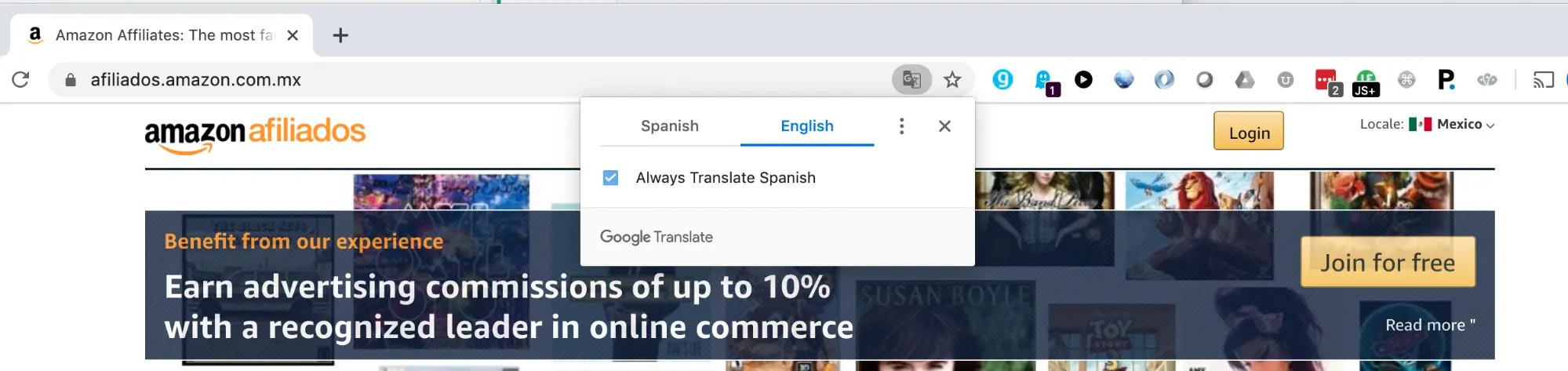
If you are applying for an Amazon affiliate program that is in a foreign language, then using the Chrome browser with built-in translation can be really helpful.
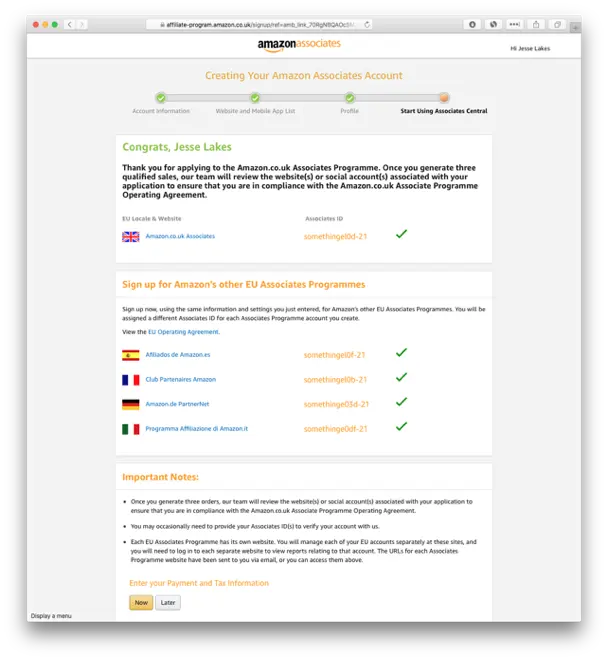
If you are signing up for the UK program, then at the end you'll be asked if you want to use the same information to automatically apply for the other four programs in Europe. I encourage you to do this and save yourself some time (and fumbling around with foreign languages).
Remember that any information you add now can be updated later. This means you can speed through fairly quickly, but on the flipside, it's important to keep your information up to date as your strategies develop and your portfolio and online presence expand.
On a related note, it's important to know if you plan to primarily be using your affiliate links on social media that you include the full channel when you list out your websites. For example, just listing YouTube.com isn't enough -- they want to know the full URL to your channel.
While we typically encourage you to fill out your tax and payment information while you are signing up, you don't have to. And since you won't be paid for approximately 60 to 90 days after you start earning commissions, you have plenty of time to come back to it.
Next steps
Once you've gotten signed up with your first Amazon affiliate program, it's time to get your affiliate links in front of your audience.
There are lots of different ways to do this and they depend on the niche that you've built.
For communities around social media, an intelligent link management tool can be really helpful. May we recommend Geniuslink?
For Wordpress-based websites, there are a number of plugins that can be really helpful. Our favorite, because we built it, is the Amazon Link Engine, which converts your regular Amazon links and turns them into globally aware Amazon affiliate links.
Chapter 3 - How to Stay Compliant as an Amazon Affiliate
- Understand the importance of being compliant with Amazon's Operating Agreement.
- Learn the top ways to get your account in trouble.
- Learn best practices for posting affiliate links on social media.
In your excitement to get started with your new Amazon affiliate account, I'm guessing you didn't get a chance to dig into the Amazon Associates Operating Agreement or the accompanying Policies page, did you?
While it's not edge-of-your-seat, page-turning material, it is really important to read! The Operating Agreement and Polices outline the rules of the Amazon Associates game, and it's easy to lose the game if you don't know the rules.
For better or worse, the Amazon compliance team is really good at finding possible violations and for affiliate publishers, pleading ignorance isn't enough to keep your account in good standing.
Further, just doing the same as other affiliate sites you see online isn't a valid excuse either. Unfortunately, there is a lot of misinformation and misunderstandings related to Amazon affiliate governance and policies, so it's best to go to the source.
We believe it's not worth risking your account with the largest affiliate program in the world due to being in a hurry, and we strongly encourage you to take the time to read the operating agreement and policies. But we want to help you get started on the right foot.
This is a topic we feel passionately about! We've written about it many times in our blog and spoken about on stage, in webinars and in podcast interviews. While this chapter is no substitute for reading the operating agreement and policies, we wanted to share the top reasons we've seen affiliate publishers get their accounts closed, as well as share a few additional notes for those who plan to primarily use social media for their affiliate marketing campaigns. Please don't make these same mistakes!
Cloaking links

This is a broad category, and there are really three different things that can get you in trouble here if you don't pay attention.
No cloaking - "Cloaking," in the world of affiliate marketing, is the process of intentionally hiding or disguising that a link is actually an affiliate link. While there is some semi-legitimate reasoning behind why you would do this, you absolutely want to avoid this practice with your Amazon affiliate links.
It's important to note Amazon absolutely allows you to use a link shortener with your Amazon affiliate links. However when doing so, it's important that you disclose the destination of your link, which leads us to the next consideration.
Not mentioning Amazon - "Shopper Trust" is an important theme to Amazon and that relates to their affiliate program as well. When you post Amazon affiliate links using a third-party tool, like Geniuslink, it's really important that you mention "Amazon" in near proximity to the link. This is especially important for shortened links used on social media. It's essential the shopper knows where they are going when they click on that link (it can also help with conversion rates by helping the shopper better trust the link).
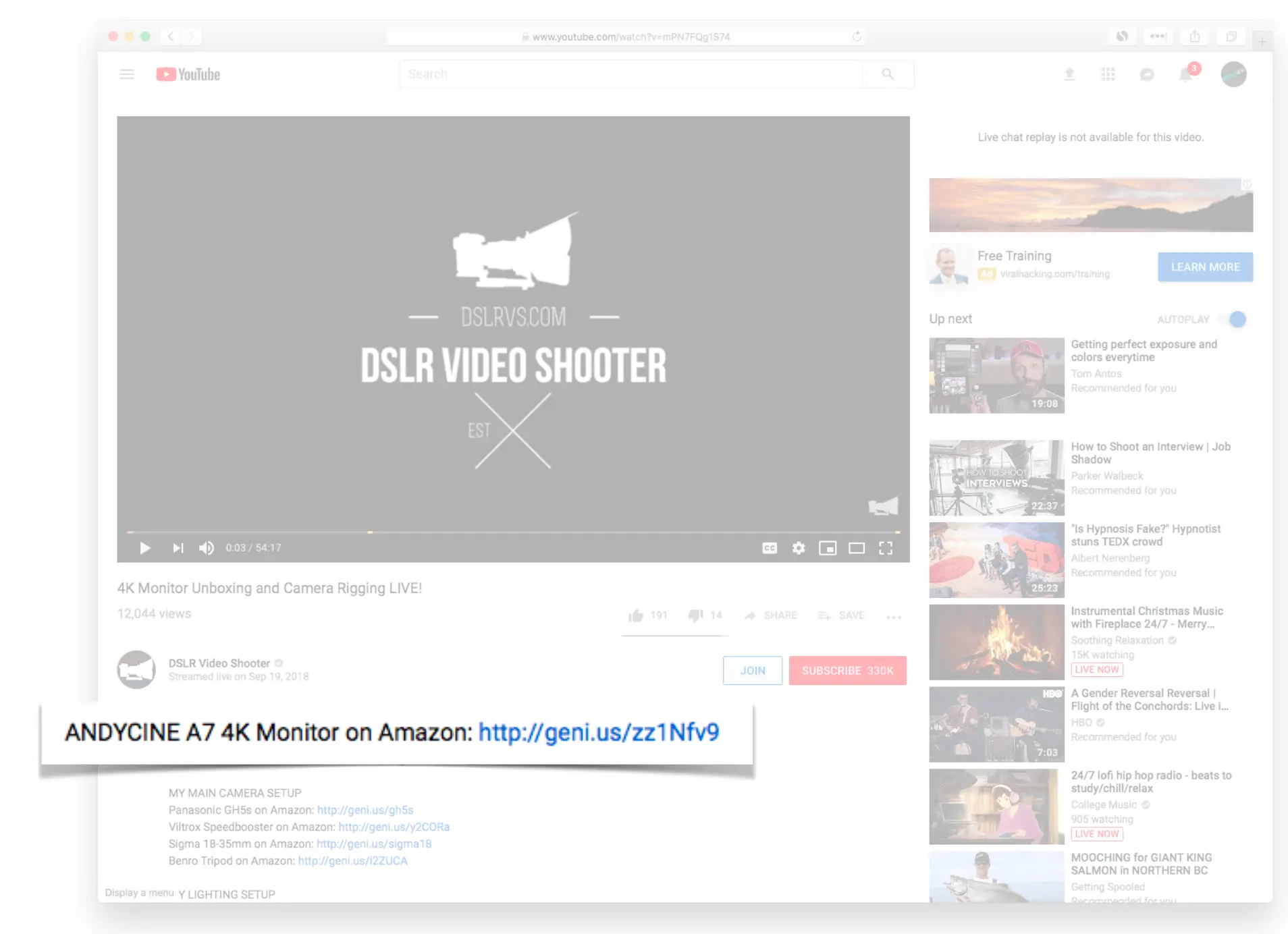
Additionally, when your affiliate link is live on a website, it's important the consumer again knows where the link will take them. You can include visual cues in near proximity of the links, include Amazon in the call to action, or with some third-party tools you can let the link remain an Amazon link, so when the shopper mouses over the link in their browser, the status bar shows the Amazon URL.
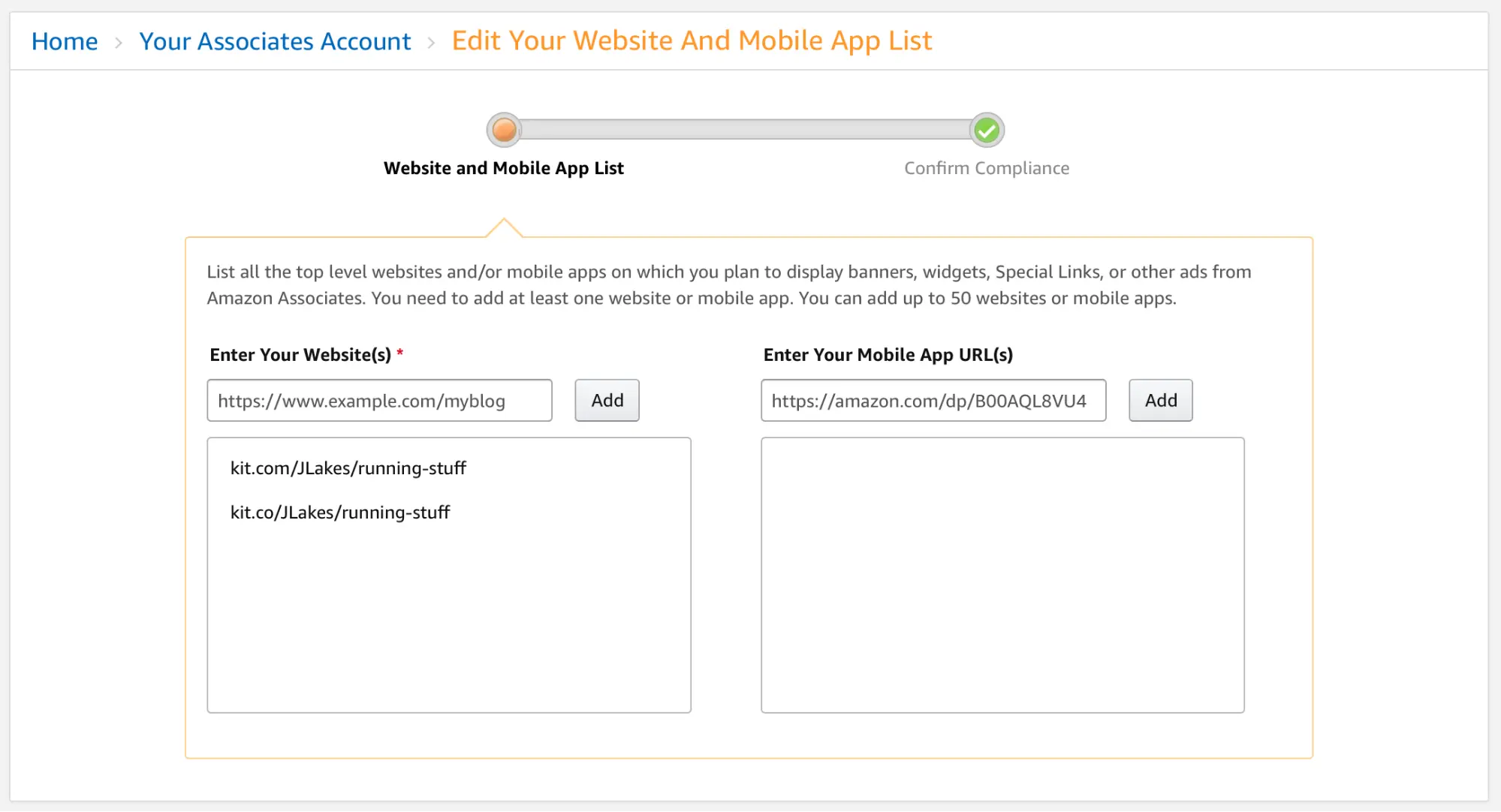
Not listing your site/channel - Remember that step when you were signing up for the Amazon affiliate program where you listed the various sites and social media channels you were planning on using your links? Well, have you kept that updated? Unfortunately, it's easy to have a shifting strategy and place your affiliate links in new places and forget to update that list (via the Associates Central dashboard). This can get you in trouble with the Amazon compliance team and is easy to do.
Offline links
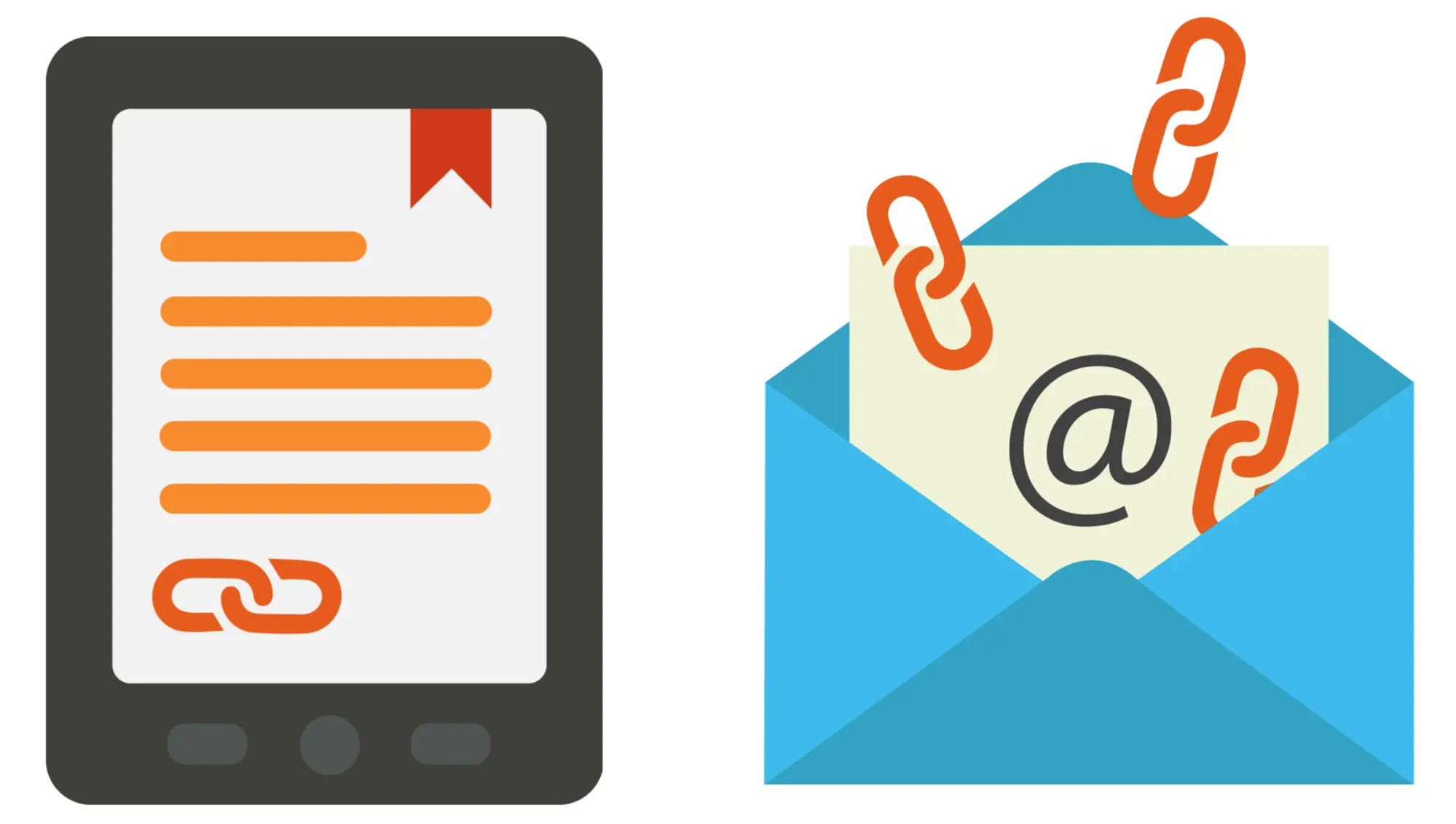
Amazon doesn't like it when they can't track or review the placement of your affiliate links and as such has a rule about no "offline" placements. While one might debate their definition of "offline," it is their program, so they get to decide. Ultimately, it means affiliate links aren't allowed to be directly placed into email, PDFs, or eBooks or in print, QR codes, etc.
Yes, we know that some of the larger personalities online might be including Amazon affiliate links in their regular email newsletters, but that's technically against the rules for us with the standard Amazon Associates agreement.
However, there is a legitimate workaround for when you want to place an affiliate link in an email, PDF, ebook, printed, or via a QR code -- instead place a link to a Geniuslink "Choice Page." These Choice Pages are optimized landing pages that are specifically built to recommend a product via an affiliate link and include the necessary disclaimer (more on that in a moment). And because the affiliate link technically lives on this landing page, it's not in violation of Amazon's rules for their affiliate program.
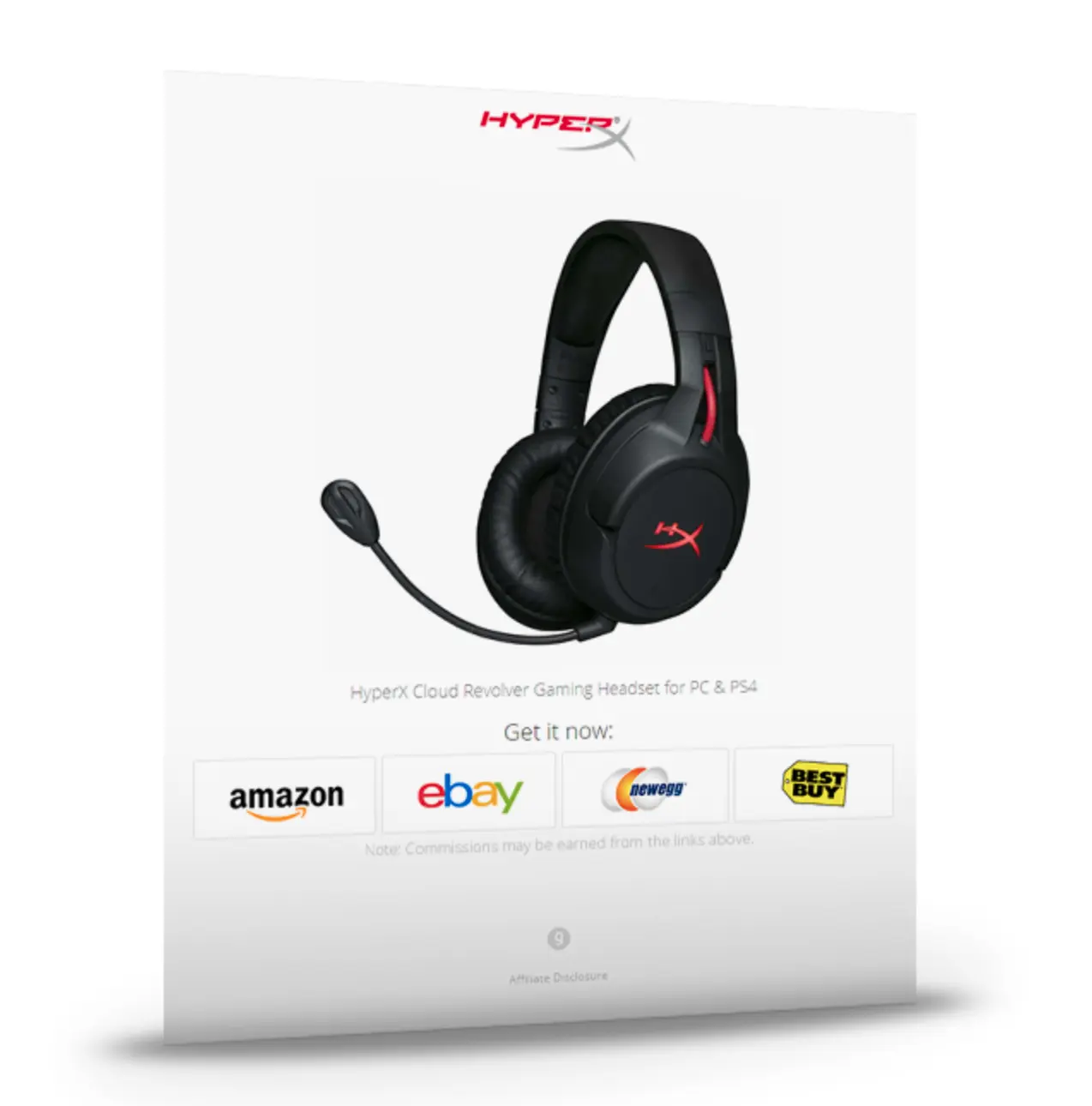
It's important to note that by using Choice Pages, you also need to update your list of websites/channels where your affiliate links go so you aren't labeled as cloaking your links as described above.
Mentioning prices (or availability)
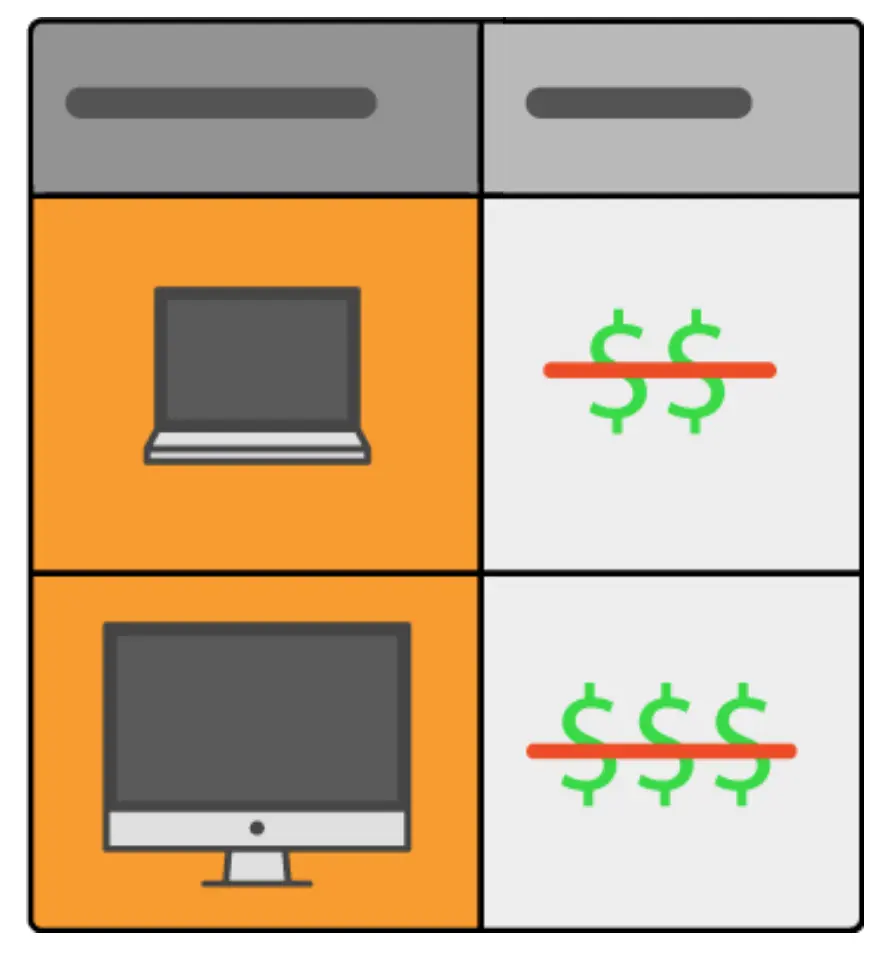
Remember that "Shopper Trust" is an important theme. Further, it's important to note that Amazon's product catalog is constantly updating. Combining these, you can quickly realize why Amazon doesn't like it when you mention specific pricing or availability of a product -- it's likely that shortly after you publish this information it will be out of date and wrong.
As a result, Amazon has a hard rule that any mention of pricing or availability can't be more than 24 hours old and strongly recommends that if you plan to use pricing or availability in your affiliate marketing, you take advantage of a tool that leverages the Product Advertising API or use it directly yourself.
Using their star ratings and reviews

Similar to the note above, due to the volatility of their store, Amazon doesn't like affiliate publishers using "static" versions of their star ratings or product reviews. These are available to use if you are using a "dynamic" source, specifically Amazon's PA API or a tool that takes advantage of it.
They do not appear to have any problem with you using your own rating system or your own reviews! Just be sure to make it clear that it's yours.
Asking for a click or bookmark on your affiliate link

Don't do it!
Amazon doesn't allow any sort of "incentivized" behavior concerning their affiliate links. This can be as simple as mentioning your page or channel is "supported" by Amazon's affiliate program or earning affiliate commissions. On the flipside, being as forward as asking someone to click your link before making a purchase on Amazon or asking someone to bookmark your affiliate link for future purchases will certainly land you in hot water when you are caught.
Not linking to products

Amazon's affiliate program is designed to reward you for helping them sell more products and services. It's not designed to give away a percentage of their margin when no value is being added to the buying process. As a result, you can quickly get kicked out of the affiliate program by turning your links to support articles on Amazon into affiliate links, etc.
Not including an affiliate disclaimer

Letting your audience know that you are promoting a product and that money is on the line is absolutely critical in the world of affiliate marketing, especially with the Amazon affiliate program.
There are actually two levels at which it's important to make disclosures and publicly state your usage of an affiliate program, Amazon's program or note. One is at the "link-level" to fulfill the FTC guidelines, and another is at the site- or channel-level to ensure compliance with the Amazon Associates Operating Agreement.
FTC DisclaimerThe Federal Trade Commission, of the US, has the mandate to help ensure transparency to the average (American) shopper, specifically that they know when they are being advertised to. In the eyes of the FTC, being "advertised" to includes using affiliate links when you recommend products. As a result, to be in good standing you need to make a disclosure that is "clear" and "conspicuous."
While we aren't qualified to say exactly what this means, we do know that saying "affiliate link" isn't good enough as the FTC argues that "affiliate" isn't a term the average consumer knows. Because of this, we recommend making sure your disclosure includes verbiage about "earning" money.
It is also fairly clear that a disclaimer in the footer of your site doesn't fit the FTC guidelines. Rather the preference is in near proximity of your links or, as we regularly see, at the beginning of your article in full view.
These rules are also applicable to social media, not just websites! Be sure to include your FTC, link-level disclaimers in your tweets, posts, and video descriptions. If you don't have room or don't like the look, then you may want to check out Choice Pages that include a built-in FTC disclosure.
Amazon Associates DisclaimerIn addition to the FTC disclaimer, the Amazon Affiliate program also requires you to include a notice to your community in regards to your relationship with Amazon. This disclosure has been shortened to a single sentence that simply reads:
"As an Amazon Associate I earn from qualifying purchases."
Unlike the FTC disclosure, this one is allowed to be a bit more buried and is okay in your Terms of Service or About Us page. Ideally though, it will live on it's own disclosures page on your website and include a link from your link-level FTC disclosure.
For social media, the Amazon disclosure can live in the "info" or "about" section of your social media profile.
Additional concerns for social media

Using the Amazon affiliate program on Twitter, Twitch, Pinterest, YouTube, Facebook and other social media platforms is growing quickly and fully supported by Amazon, with a few caveats. They've outlined a few clarifications to social media use in a separate article. In short those include:
Only In Your ChannelThe Amazon affiliate program makes the requirement that you only post links when "You are the sole moderator of the account that you plan to post to." This means that posting your affiliate links in forums, groups or in replies/comments isn't cool.
PublicAmazon has a comprehensive review process to ensure compliance within its affiliate program, and in order for that process to work, your links must be posted somewhere that is easily accessible. If Amazon's compliance team can't check your links to review them then they can't ensure you are following the rules.
No Paid AdsAmazon straight up says "No, you cannot use affiliate links in paid ads or pay ("boost") posts that include affiliate links. They cannot contain or be used to advertise your Amazon affiliate links and send the customer directly to Amazon."
However, if you are looking for a solution to this, we'd again recommend linking to Choice Pages from your ads.
Grey area
While the Operating Agreement and Policies page answers a lot of questions and clarifies a lot of things, we'll be the first to admit that you'll still find there are grey areas. When you come across these, and they are applicable to what you are trying to do, it's best not to ignore them and assume that you can make a good point (trust me, they play their game by their rules). As a result, we recommend these two things:
First, think about the situation from Amazon's perspective and be honest with yourself. Would Amazon want you doing this? The likely answer is probably no.
Second, ask them! There are multiple ways to contact Amazon affiliate support including by chat, a phone number, and a form to start an email thread. However, when you ask a question, we recommend you don't just ask once but ask via different channels and different mediums. We recommend asking the same question, phrased slightly differently, at least three times and comparing the response and using the response that came up most often.
Chapter 4 - How to Increase Your Amazon Affiliate Commissions (aka Best Practices)

- Learn how SEO is crucial to success with affiliate marketing.
- See how Conversion rate optimization is also an essential skill.
- Read how building an audience should be your top priority
From supporting thousands of Amazon affiliate bloggers over the years, we are in the unique position of having some really interesting conversations with bloggers, creators and influencers who use the program. We've also learned, for the most part, there is no "silver bullet," and big monthly affiliate payouts come from months of hard work. We've also learned the "tricks" are typically just slow death sentences and doing things the right way (the "white hat" approach) is critical to long-term health and wealth in your affiliate marketing business.
We have also heard some things get repeated time and time again about how to build a successful business around affiliate marketing. We have aggregated those below so you have some best practices to get started with. Please note that what works well for one person may not work well for you, so don't be afraid of being agile and tweaking these, and adding others, to build your playbook for maximizing your affiliate commissions.
Search Engine Optimization
While not specific to affiliate marketing, SEO is the backbone for internet marketing. Whether you have a YouTube channel or a niche authority blog (or both), it's important you drive people who have a general interest in your domain to your content so they can click on them! There is no point generating a ton of content if no one is going to interact with it. So while you hone your affiliate marketing skills, be sure to at least dabble in SEO skills as well.
While SEO is not our specialty, there are some amazing people who also happen to be affiliate marketers who offer great resources.
However, outside of the general platitudes of building backlinks and keyword research, there are a few tidbits we've heard repeated a number of times from people we trust.
First is a focus around internal links -- the links from one of your pages to another page. Oftentimes internal links are an afterthought, but many are finding that optimization of your website around backlinks can be a higher ROI than building backlinks, especially for a more mature site.
The second is around "niching down" and not only focusing your site or channel on very specific areas but following the same principle with your keyword research. It seems that focusing on long tail keywords with low competition will often yield promising results well before mid-body or top keywords or those with more competition. Winning lots of little battles for traffic is not only good for generating traffic, and subsequently affiliate commissions, but helpful in morale, too!
A focus on "Buyer's" keywords can also be helpful in getting the right traffic to your site or channel. This means targeting people who may be lower in the marketing funnel and who are more mentally prepared to make the purchase than those who are just starting their research on a specific product category that ties into your niche.
Multiple affiliate links per page
An easy trap to fall into early in your affiliate journey is to write a good product review but then only include a single affiliate link at the end of your article. This only gives you a single chance to earn a commission.
The best practice is to actually include multiple affiliate links for the product throughout the page, starting as early as the first paragraph. Including a link where you mention the name of the specific product you are reviewing or including a call to action halfway through your review can also be helpful.
Call to actionA quick note on the "Call to Action." A CTA is the phrase you use to encourage your readers to take action, click on your affiliate link, and move through the buying process. Experimenting with your CTAs can lead to an incremental increase in conversion rates, but it's something you need to also be careful with!
Having a strong call to action can be helpful in that conversion from page visits to link clicks. For example, ending your CTA with the word "now" to inspire action in a timely manner.
You'll also want to try and include a CTA above the fold (what is shown in the browser window before you start to scroll) and in the first paragraph allows those in your audience who are eager to buy an easy excuse to move forward with one of your affiliate links.
It's important to remember not to get too aggressive with your CTAs and be cautious of the Amazon affiliate rules. This primarily means being cognizant of "incentivizing" clicks like we talked about in the prior section. Further, you want to be weary of what we call "weasel words" (such as "best, discount, lowest, sale, etc." that may not actually be true).
Including multiple CTAs through your page can be helpful -- just be sure you don't over do it and sound too much like a used car salesman.
Related ProductsAnother way to include additional affiliate links on your page is by including a section in your review about products related to the one you are reviewing. You see Amazon doing this all of the time with their "Customers Who Bought This Item Also Bought" section on every product page. It's a great practice and something you can easily apply to your review articles and still add value to the buying process.
Comparisons
A very common practice these days is around reviewing multiple competing products in a single page or video, like with a "buying guide." This allows for a few different best practices to peek through, including using comparison tables, being authentic, and anchoring.
Comparison tables are another aspect that Amazon uses regularly on their site. Keep scrolling past the "Customers Who Bought This Item Also Bought" section and you are likely to come across one. These tables are great to start off with an affiliate link behind a strong call to action ("CTA") and a good way to recap the aspects of the products you were reviewing.
Authenticity is a very important aspect of doing product reviews and something we strongly recommend. You'll likely find that when you give realistic reviews and don't skip over the negatives of a product, you'll find your conversion rates increase as people are more willing to trust you. With any product review, a section that highlights the not-so-great aspects is important. Affiliate marketers often find it's easier to be critical of a product when comparing it to its peers as it often feels more natural.
Finally, comparisons are a great place to introduce the concept of anchoring. Anchoring is a "cognitive bias" that you likely see a hundred times a day but subconsciously ignore. In short, anchoring is the practice of how you order things so that you place the item you don't intend to sell first so that the second or third item seem more favorable after comparing them to the first. For example, placing the most expensive product first makes the second, a lower-price item, seem more attractive instead of ordering the list from least expensive to most expensive.
One thing to note is that including too many products in your comparisons can lead to the paradox of choice and actually hamper the buying process. It seems that three to five products is the sweet spot.
Building a community
Typically when we start out in our affiliate marketing journey, we are eager to make recommendations and generate revenue. While this is certainly an important goal, it's important not to be short sighted.
Many experts in the world of affiliate marketing actually prioritize generated affiliate sales as a secondary goal. Their primary goal is to build an engaged and active community. It's only then that they start to make product recommendations and generate affiliate revenue. Once you have a community and have built trust, you'll find that making recommendations of products and services (via affiliate links) is significantly easier and your campaigns will likely convert much higher.
For some channels, this is easier than others. For example, on YouTube a primary goal is to build that subscriber base. Those subscribers are the community, and once you have a large active group, it's easier to make recommendations that result in sales.
For websites, this can be a bit more of a challenge as that "community" aspect isn't as inherent as it is with social media. As a result, a primary goal for niche websites is to build an email list and then keep that active with regular emails. The website eventually becomes less important and the email list, aka the community, becomes much more important.
Just remember, you can't embed Amazon affiliate links directly into your emails! But you can use your emails to drive them to a landing page (or Choice Page) from where you have your Amazon affiliate links.
International shoppers
The internet has never been more global, and chances are the people visiting your site, reading your posts, and watching your videos are from all over the world. One of the most amazing things about the internet is how it brings together people who care about super specific and niche things into tribes no matter where they are from. It's also easy to forget about the international aspect of your audience, but it's something we strongly recommend you check on, especially after you've started to see some initial traction with your site or channel.
While at some point you might consider localizing your page or channel with additional languages, the gist is that if someone is visiting your site or channel now, the language isn't the biggest hurdle for them.
However, reading or consuming content in a foreign language is way easier than buying something from a foreign store! Amazon knows this and has spent billions of dollars on a solution. Amazon currently has over 20 independent storefronts around the world and continues to launch new Amazon storefronts in various parts of the world to cater to shoppers in specific countries and regions. When Amazon does this, they can offer not only a shopping experience in a local language but also in local currency with fast and efficient shipping and delivery, as well as the appropriate taxes. Ultimately, this a much more streamlined buying experience and results in much higher conversion rates.

So while it is possible to send your whole audience to a single Amazon store, and earn some affiliate commissions, if you are like the thousands of clients we have at Geniuslink, you'll likely see a significant increase in your conversion rates and commissions when you start sending each of your foreign shoppers to the appropriate product in their local Amazon storefront. More about how to optimize your Amazon affiliate links for your global audience is in the next section.
Chapter 5 - Going Global With Your Amazon Affiliate Links
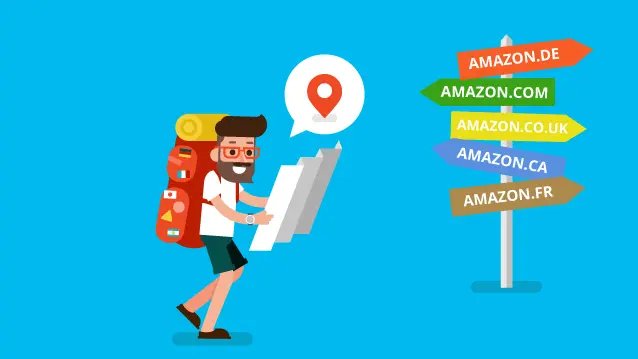
- Understand how Amazon's affiliate program is geographically fragmented.
- Explore how your revenue may be impacted by "geo-fragmentation."
- Learn best practices, and tools, for supporting and monetizing an international audience.
As we alluded to in the prior chapter, one of the key optimizations -- practiced across the board -- is to expand past using a single Amazon affiliate program to concurrently using many of the regional affiliate programs. Traditionally, Amazon links are static and send everyone, no matter where they are from, to the same destination. So there is some work involved getting past this, but working through the setup has two major benefits.
First, and most importantly, is around an improved user experience for your international community. By sending them to the correct product but in their local Amazon storefront, they can take advantage of their Prime membership, can transact in their local currency, should receive the product faster via local shipping, and having the process in their native language should reduce the friction in the whole buying process. This improvement in the buying experience not only helps in the financial aspects, discussed next, but should also help you continue to grow your international audience.
Please note, however, that just signing up for an international Amazon affiliate program won't magically make your links work. (More on that in a minute.)
The second major benefit is financial. By moving to an "intelligent" Amazon affiliate link, one that sends foreign shoppers to the right product in their local Amazon storefront, you should also see an increase in your conversion rates, your earnings per click, and ultimately your total revenue.
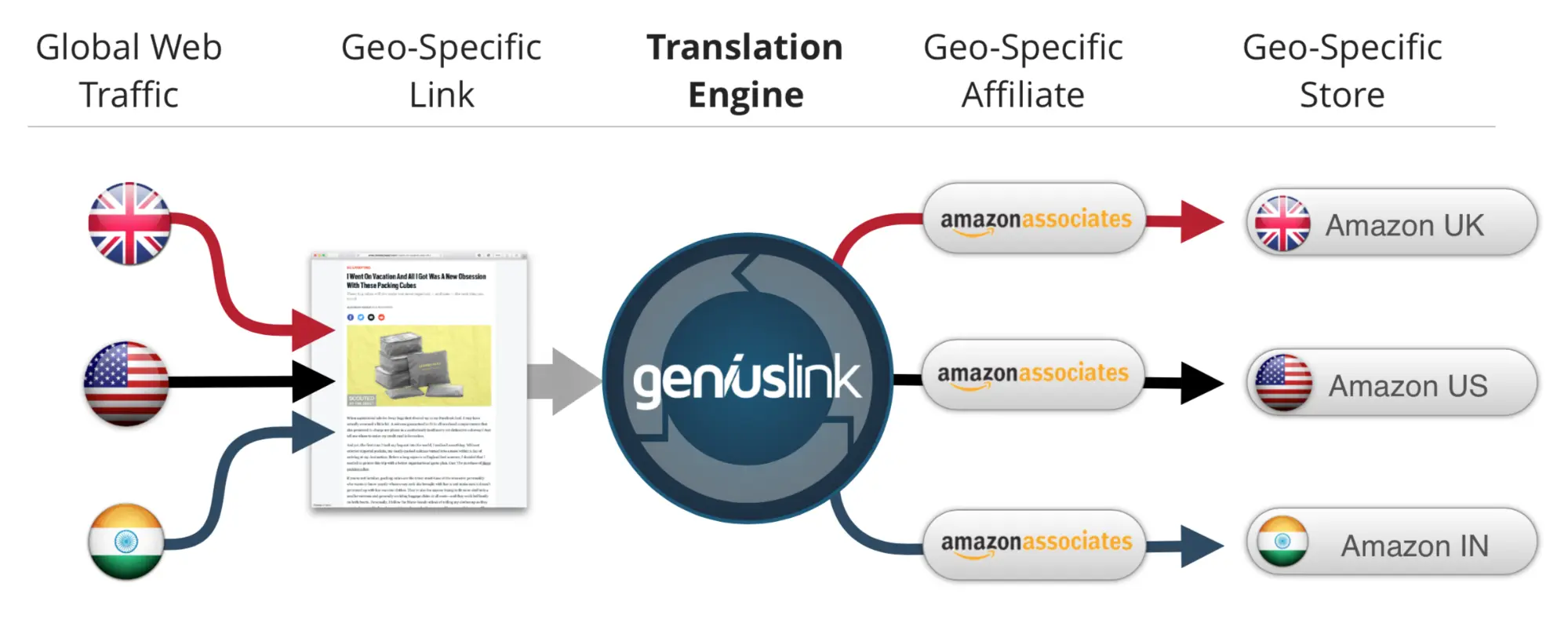
This happens because the international shoppers who you were sending to your local storefront (say your UK shoppers getting sent to Amazon.com) had a significantly lower chance of converting due to the items we outlined above. However, by sending your UK shoppers to the correct product in Amazon.co.uk, the Amazon storefront specifically optimized to support shoppers in the UK, you'll see a much higher conversion rate.
Is your audience international?
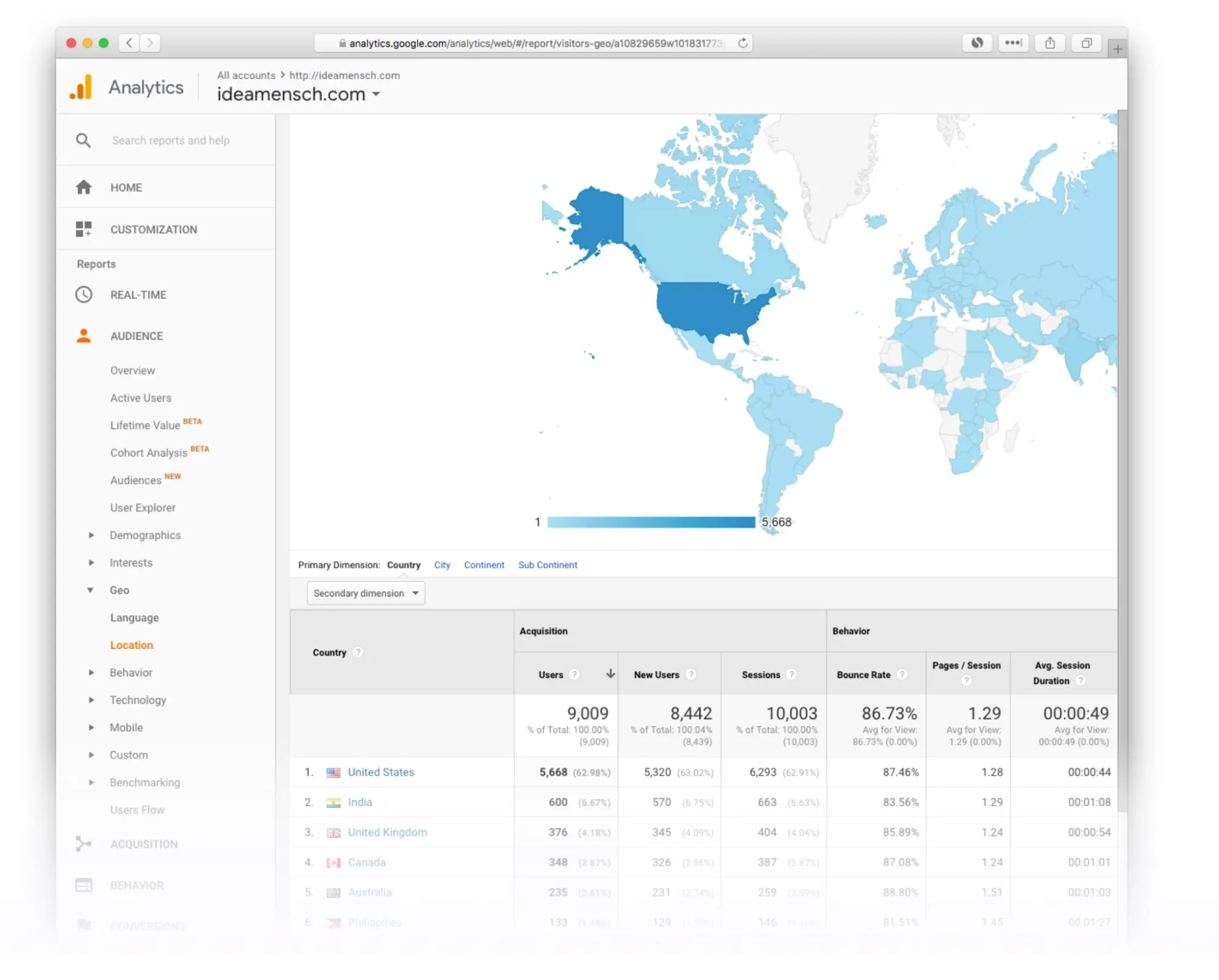
Many of us don't realize how diverse our traffic is after spending all of our time in the weeds creating content, working on SEO, building affiliate links, etc. As a result, I would encourage you to take a moment right now and check your site or channel analytics. Every analytics package I've ever seen has a geographic breakdown, and I encourage you to find and review that right now. As you look at it, you have two questions to answer.
How much of my traffic is domestic and matches the Amazon store and affiliate program I'm currently using?
How much of my traffic is international? And more specifically, what are my top five international countries?
If your international audience is less than 10% of your total, then I'd encourage you to just jump to the next section.
However, if it's more than 10%, then please keep reading. We've found that for every 10% of international traffic you get, when you localize your Amazon affiliate links you'll likely see your total revenue increase by 5%. For example, if your site or channel had 50% international traffic and you were making $1K a month from Amazon.com commissions, then localizing your Amazon affiliate links should add another $250 to your total revenue. This brings you up to $1,250 a month in commissions with no additional work or traffic. This $250 is essentially "found money" or money that was previously just "left on the table!"
International Amazon affiliate programs
As of this writing, there are now 16 public Amazon affiliate programs -- and one that is currently private -- spread across the world. In addition, we see new Amazon storefronts and their corresponding affiliate programs launching approximately every six months.
The international Amazon affiliate program landscape currently includes:
AmericasUnited States: Amazon.com/Amazon Associates: https://affiliate-program.amazon.com/home
Canada: Amazon.ca/Amazon Associates: https://associates.amazon.ca
Mexico: Amazon.com.mx/Amazon Afiliados: https://afiliados.amazon.com.mx
Brazil: Amazon.com.br/Associados Amazon: https://associados.amazon.com.br
EuropeUnited Kingdom: Amazon.co.uk/Amazon Associates: https://affiliate-program.amazon.co.uk
Germany: Amazon.de/Amazon PartnerNet: https://partnernet.amazon.de
France: Amazon.fr/Club Partenaires Amazon: https://partenaires.amazon.fr
Spain: Amazon.es/Amazon Afiliados: https://afiliados.amazon.es
Italy: Amazon.it / Programma Affiliazione Amazon: https://programma-affiliazione.amazon.it
Netherlands: Amazon.nl / Amazon PartnerNet: https://partnernet.amazon.nl
Turkey: amazon.com.tr / Amazon Gelir Ortakligi: https://gelirortakligi.amazon.com.tr
*The affiliate program for Turkey is currently private and requires an invite.
AsiaJapan: Amazon.co.jp: https://affiliate.amazon.co.jp
India: Amazon.in / Amazon Associates: https://affiliate-program.amazon.in
China: Amazon.cn / Amazon Associates: https://associates.amazon.cn
Singapore: Amazon.sg / Amazon Associates: https://affiliate-program.amazon.sg
United Arab Emirates: Amazon.ae / Amazon Associates: https://affiliate-program.amazon.ae
OceaniaAustralia: Amazon.com.au / Amazon Associates: https://affiliate-program.amazon.com.au
Where to start (and which Amazon affiliate programs to avoid)
The first Amazon affiliate program you should start with should be where you thought the bulk of your audience was going to be coming from, likely where you are based. Now, your goal is to sign up for additional international Amazon affiliate programs where you see significant traffic. This will likely be slightly different for everyone, however, this is the typical game plan one might use.
Most of our clients start with Amazon.com because they are either US-based or their audience is primarily US-based.
Next is typically Canada (amazon.ca), followed closely by Amazon.co.uk (UK). These represent the English-speaking countries with the largest Amazon stores (Amazon.com.au / Australia is English speaking but a smaller and much newer storefront).
A trick when signing up with the Amazon UK program is that after you've finished the process, you can automatically apply the same information to four additional programs in Europe: Germany, Italy, France, and Spain. This makes the sign-up process significantly faster and when factored in with Canada and the original Amazon.com / US program gives you seven affiliate programs that often cover the bulk of your international audience.
Each of these programs (US/Canada/UK/France/Germany/Italy/Spain) offer commission payouts via direct deposit to a number of countries.
The next affiliate programs typically sought include Amazon.co.jp (Japan) and Amazon.com.au (Australia). With the more recent launches of affiliate programs for Amazon.ae (UAE), Amazon.sg (Singapore), and amazon.nl (Netherlands), we'd bucket those here as well.
The affiliate program for Amazon.in (India) is a bit tricky as it doesn't currently provide international payments. We recommend to our clients that if they have a sizable audience from India, sign up with Cuelinks to access the Amazon.in program. Cuelinks can then help deal with the taxes and fees for making international payments for your Amazon.in sales.

The Amazon.cn (China) storefront and affiliate program hasn't received much attention in the last couple years and we guess that it won't in the future so we don't recommend putting much focus there.
The Amazon.com.mx (Mexico) and Amazon.com.br (Brazil) affiliate programs are similar to India in that they don't currently make international payments. So unless you live there, or know someone who does and is okay with you using their local bank account, then we typically recommend avoiding these programs as you can earn commissions internationally but won't be able to be paid for your referrals.
The Amazon.com.tr (Turkey) affiliate program is currently set to private and requires an invitation to participate.
While getting signed up for the international affiliate programs can be a bit of work, each program uses the exact same form so each one shouldn't take more than 10-20 minutes.
Intelligent links
Getting signed up is only part of the battle. You are ready to earn commissions from referrals to each of the storefronts, so now you need to drive sales!
The most basic way to do this -- and what we DO NOT recommend -- is for each product you recommend, adding all of your regional Amazon affiliate links and having the consumer decide. First, this creates friction in the buying process for all of your consumers, and we often see that conversion actually decreases across the board. It's also ugly and just plain bad UI!
Instead, we strongly recommend using a tool specialized in exactly this -- sending every click to the appropriate product in the Amazon storefront that is local for the shopper clicking the link. There are two major options for this type of tool, in addition, a number of Amazon affiliate-focused Wordpress plugins that provide simplistic versions of this service.
Amazon OneLink
Amazon introduced a solution to it's "geo-fragmentation" challenge in July 2017 via a javascript based tool. Initially just supporting the translation of amazon.com links to amazon.ca and amazon.co.uk, the tool later that year expanded to also support amazon.de (Germany), amazon.fr (France), amazon.es (Spain), amazon.it (Italy), and amazon.co.jp (Japan).
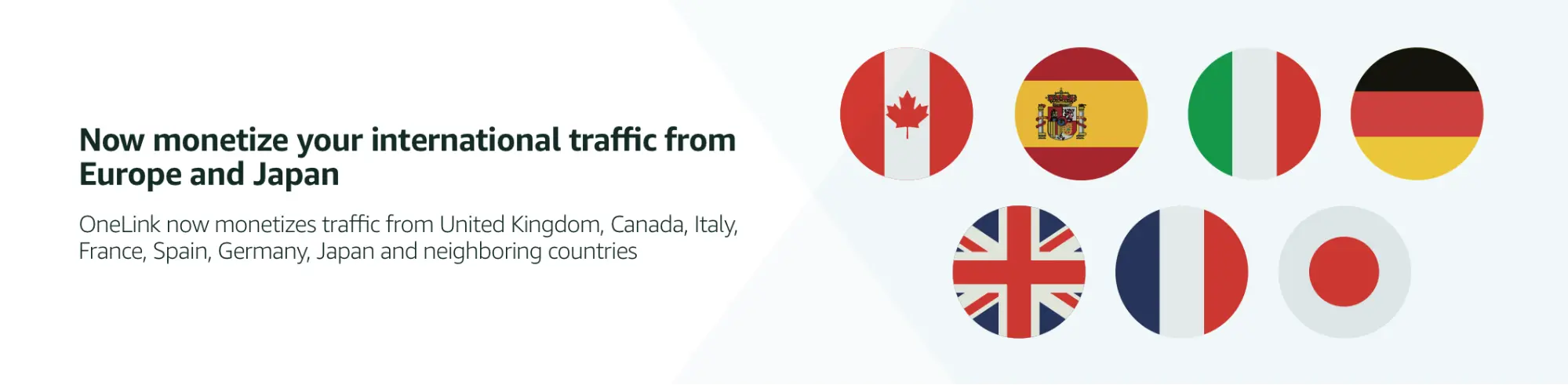
Highlights of the OneLink tool is that it is offered for free by Amazon, and it's product translation is fairly robust, especially in comparison to the other tools that existed in the space at launch.
Unfortunately, the OneLink tool has some significant downfalls including:
Ad block - OneLink is on all of the major ad blocking lists which regularly keeps international shoppers from being redirected to their local storefront.
Javascript based - Being purely javascript based limits OneLink to only working on your website (where you can install the JS correctly) and the JS is regularly blocked by shoppers using an ad-blocking extension.
Supported storefronts/affiliate programs - OneLink only works with Amazon.com links (or amzn.to links that were built from amazon.com) and can only translate to seven of the 17 total Amazon storefronts.
Geniuslink
One of the original "Intelligent" link management tools, we started supporting the Amazon affiliate program with auto-affiliation and link localization in mid 2013 after adapting our patented link translation process to support the multi-faceted retailer. In the last seven years, we've continued to improve on the service and link translation and are now the premium provider and largest independent Amazon affiliate link management platform. The Geniuslink service is used by many thousands of Amazon affiliate publishers, creators, and influencers of all sizes.
While we might be biased, the biggest complaint of Geniuslink is typically that it has a monthly fee, based on usage.
In comparison to OneLink, Geniuslink really shines.
Product Matching Accuracy - Geniuslink goes to the correct product in an international Amazon storefront significantly more often. This better translation allows for higher conversion and commission rates (Amazon pays a lower commission for search-based affiliate links in the European programs).
Link Customization - With OneLink, you are stuck with their international destinations, even if they are wrong. With Geniuslink, you have complete control over how a link functions, allowing you to fully customize the performance.
Coverage - OneLink can only translate Amazon.com links to six other storefronts. Geniuslink can translate most any Amazon link, regardless of which storefront it originated at, to most any Amazon store. The few exceptions are for the most recently added storefronts and affiliate programs, but those should be supported soon.
Implementation - While OneLink is purely Javascript-based, Geniuslink also offers a Javascript solution. However, a Wordpress plugin, API, and Chrome Extension also are offered in addition to the Geniuslink dashboard where short links can be built and fully customized. These short links can then be shared anywhere, including social media (where OneLink cannot).
Service Customization - Geniuslink offers support for using multiple tracking IDs, marking links that shouldn't be translated and other various ways to customize the service for your specific needs OneLink doesn't provide.
Next Steps
Regardless of the link management tool you choose, after signing up for the international Amazon affiliate programs that correspond with your top five countries, decide on the intelligent link management service that works best for you. It's important to implement the service then test your links and watch your reports (and check for those international commissions to start coming through) to ensure everything is working correctly.
Chapter 6 - Advanced Amazon Affiliate Tips

- Get a glimpse at advanced optimization tools and techniques to maximize commissions.
- See how diversifying your revenue can help boost your Amazon conversions.
- Learn about additional ways to recommend products and earn.
Now that you've spent some time learning a handful of best practices, getting set up to earn commissions internationally (and provide a better user experience for your foreign fans), it's again time to level up your Amazon affiliate marketing game.
The following six advanced tactics are for those who already have put in some time growing their content, have seen some traction from their efforts, are focused on building a community, and generating at least a few hundred dollars a month in commissions. If you haven't quite hit these milestones, you are still welcome to dive in, but you are likely not to see the full potential of your efforts.
Broken Amazon affiliate links
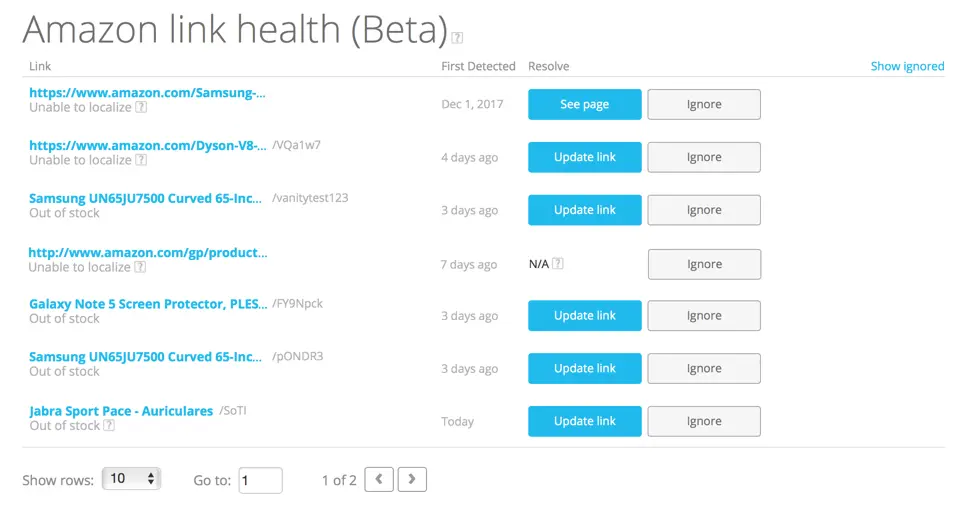
Just like the rest of the internet, links to products on Amazon can "rot," and this can be a major problem for publishers and content creators who have been building Amazon affiliate links over the course of years. A link that goes to Amazon's 404 (Dogs of Amazon) page instead of the product you are recommending isn't going to convert and essentially becomes a wasted click. Additionally, a link that goes to the correct product but is currently out of stock or no longer being sold is also a wasted effort and will convert at a significantly lower rate, if at all.
We call this "Link Health," and it's often the last thing on someone's mind as they are initially building their content and adding in their affiliate links. While the odds are that the few links you just added will "break" or the product goes out of stock are relatively low, the older your site or channel is, or the more affiliate links you have posted, the higher the odds are.
Finding and fixing these links and ensuring proper link health becomes another task to add to your growing list as you continue to grow your affiliate marketing game. Unfortunately, it's not as easy as just clicking on all of your links and seeing what ones break as that is technically against Amazon's rules (and can be very time consuming and inefficient).
With the Geniuslink platform, we've built in a link health report and provide an easy way to update affiliate links that are no longer working, recognized by Amazon's Product Advertising API, or are for products that have gone out of stock. There are other third-party tools available as well, though most seem quite expensive for the limited service they provide.
Using multiple Amazon affiliate tracking IDs
When you first start with the Amazon affiliate program, you are issued an initial tracking ID (that series of characters that ends in "-20", "-21", or "-22" based on what region of the world you are located and is responsible for converting a normal Amazon link into an Amazon affiliate link). What many people don't know is you can actually build up to 100 unique tracking IDs in your account, then within your reports you can filter each by your tracking IDs. These two pieces allow you significantly more granularity in measuring your affiliate efforts to determine what is and isn't working.
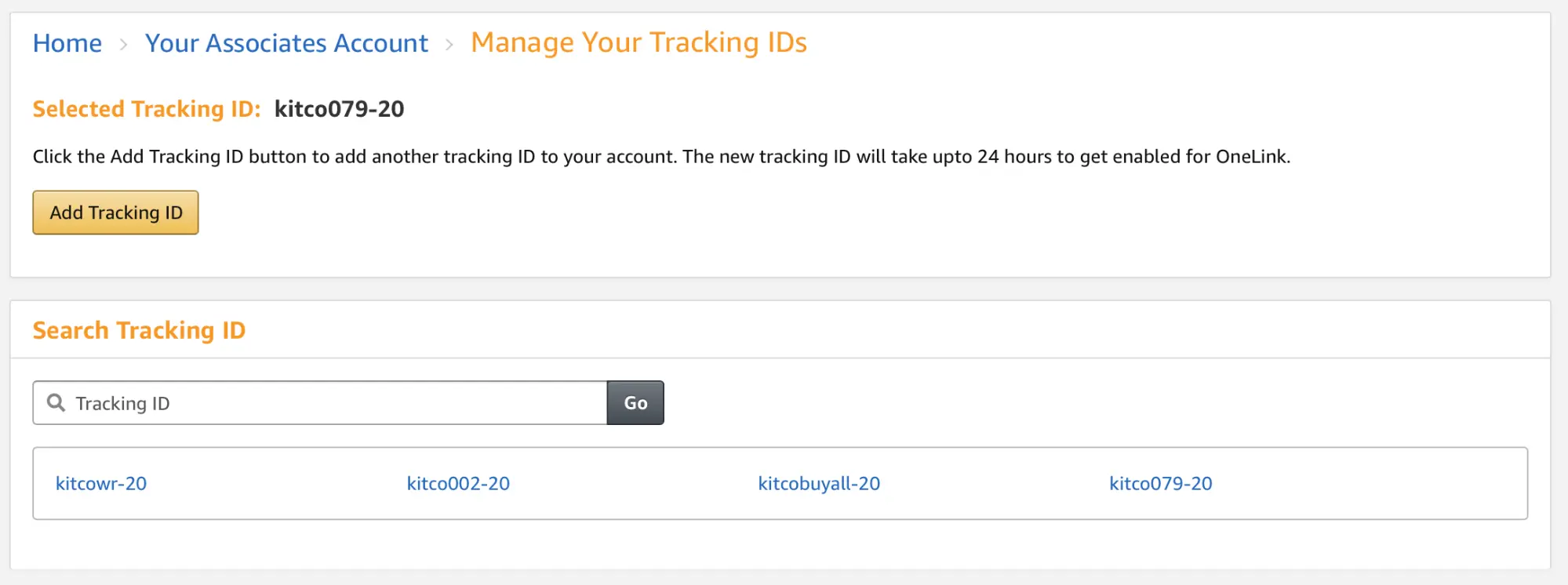
The easiest example is that you should create a new tracking ID for each web property or social media channel that you create so you can measure how each performs in comparison. This might mean that for your YouTube channel you build, then use "youtubeabc-20" and for your blog about cats, you do the same with "catsite123-20" and finally your viral dog video website would use "dogvidsxyz-20". Now that your three channels have three different tracking IDs, you can jump into the Amazon Associates Central dashboard and look at your clicks, sales and commissions on a per tracking ID, aka per digital property, basis to start to determine what is and isn't working. You may find your YouTube channel gets the least clicks but converts at the highest rate, or that your earnings per click for the viral dog video is half of what the cat blog generates, or that from your cat blog you are seeing that people are buying a lot of cat backpacks but that isn't something you've ever written about.
In each of these there are actionable insights that can be gleaned to help you focus your time and efforts or refine your strategy where having all of your links -- across all of your channels -- would have only given you a blended idea of your clicks, sales, commissions, EPC and conversion rates.
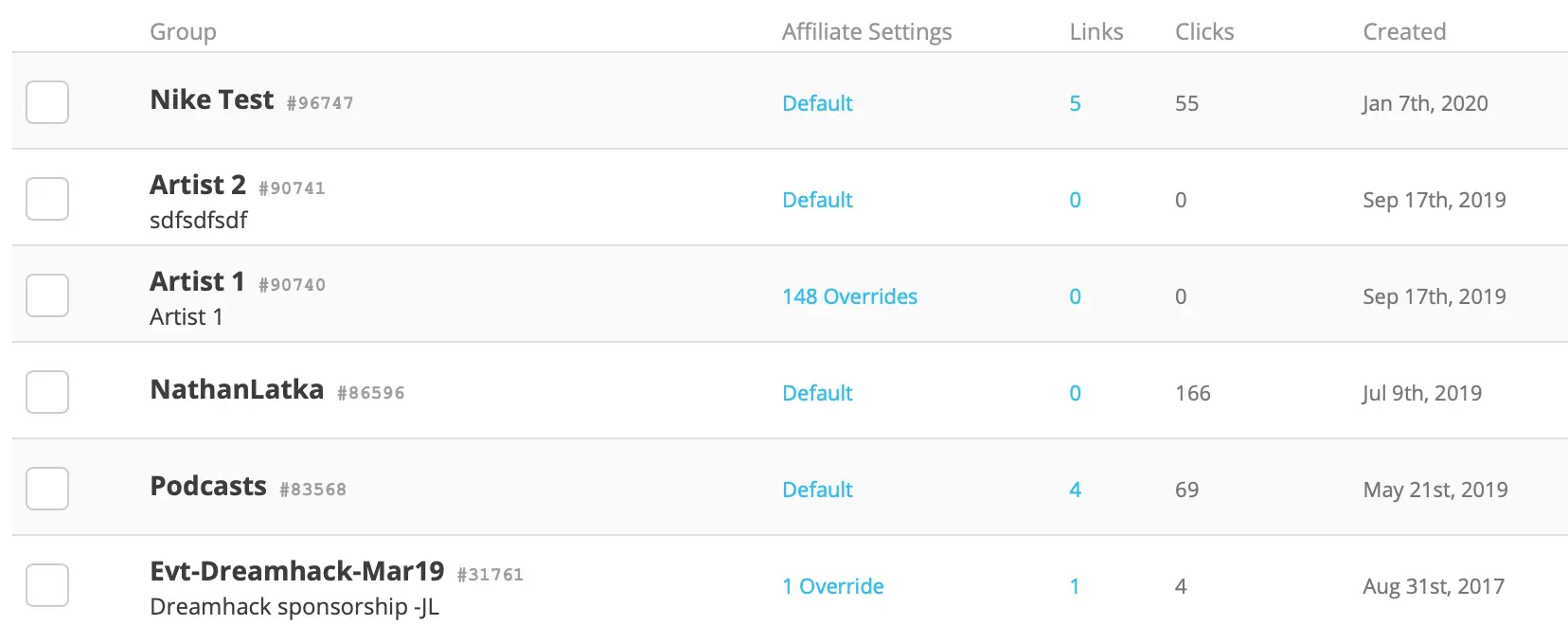
Within Geniuslink, we use a system called Groups and Overrides to allow clients to easily ensure the correct tracking information is used with each link. However, you might find that a well-organized spreadsheet is enough.
A/B testing your affiliate links
While you should always be testing your affiliate links to ensure they are acting like they should and include your affiliate tracking information, you can level up by starting to perform A/B testing with your affiliate links to incrementally increase your conversion rates and boost your affiliate revenue.
From one perspective, A/B testing your Amazon affiliate links means experimenting with the visual components of your link. This can include adjusting your call to action (be sure not to inadvertently create an "incentivized" situation), the treatment of the link (font type, size, color, etc.), and location of the affiliate links. To do this testing, there are a number of tools that can help you run multiple versions of a single webpage at the same time, including a free tool provided by Google.
The other perspective of A/B testing for Amazon affiliate links deals with changing the destination of your link. Options here include testing if a link directly to the product details page converts better than to a search results page for the product, or the product page on Amazon is best (always good to test with your audience and the products you are recommending, but we've found the product details page is typically your best bet and results in the highest commissions). For some products, like cameras, you can test if the link to the specific product converts better or if you have more luck with a camera that includes a bundle (like a case, lens, filters, memory cards, etc.). Finally, you can also test which retailer converts best -- it may not be Amazon after all!
For doing experiments with the destination of your links, the Geniuslink platform includes the ability to do A/B testing, a feature we regularly use in our own research.
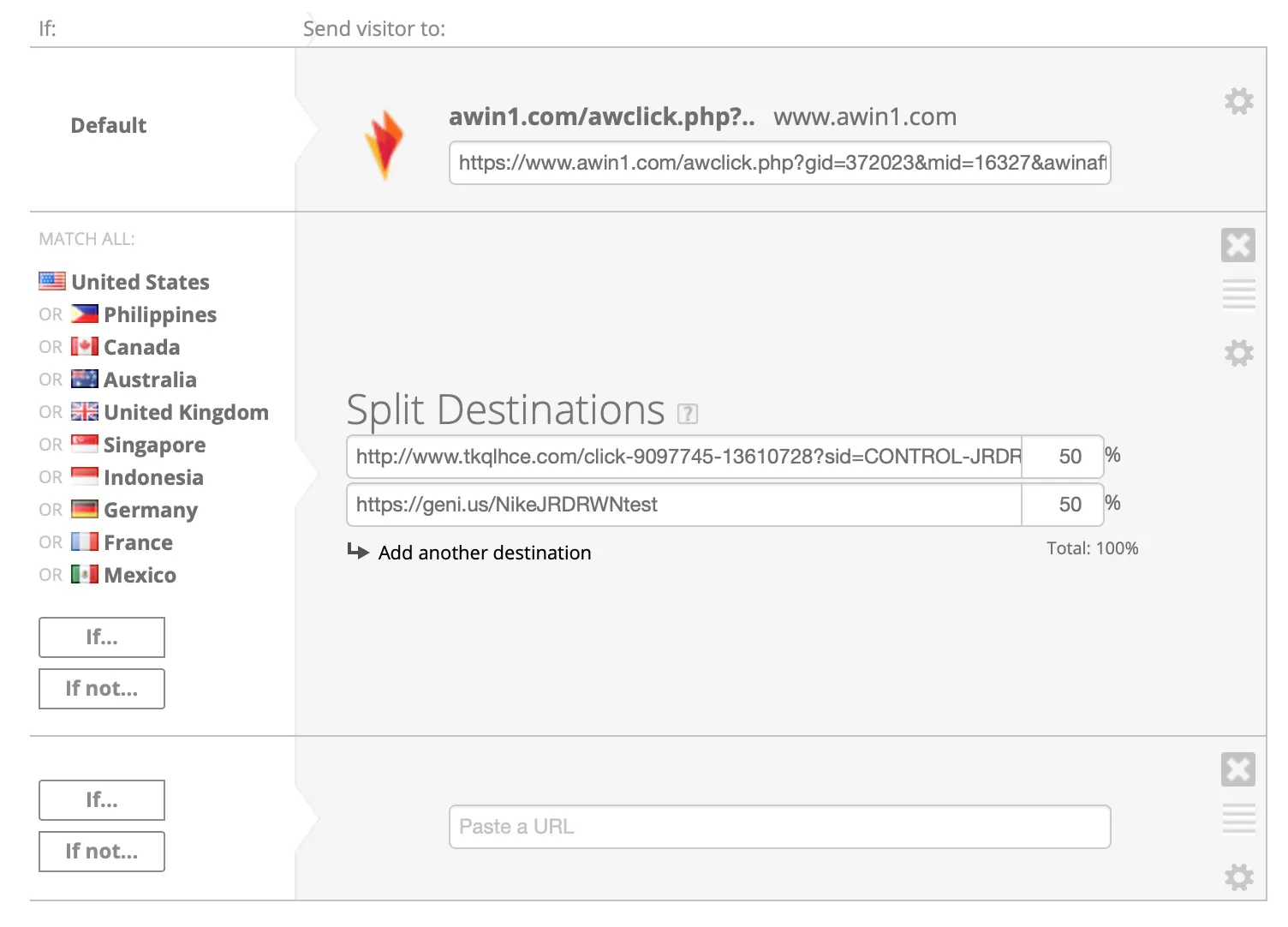
When you are doing these A/B tests, it's important to be as scientific as possible. This includes paying attention to the details, taking notes of the process, testing only one change at a time, running the experiment with a test and control version at the same time, and having enough traffic/clicks/sales that your results are close to statistically significant as possible.
Using multiple affiliate programs
While we firmly believe that Amazon's affiliate program is the best place to start, and one of the best programs in the world, it certainly isn't the only affiliate program. In fact, we strongly encourage you to start using multiple affiliate programs after you've started to get the hang of how the process works. Doing so often yields some unexpected, but positive, benefits to your affiliate game.
Amazon doesn't sell everythingThe first reason to use multiple affiliate programs is that while Amazon sells most everything, they don't sell everything! Amazon is primarily limited to consumer packaged products as well as physical and digital products. While they are expanding into selling B2B SaaS, you'll often find some of your favorite tools and services have a great affiliate or referral program that can be useful.
On the flipside, with a few exceptions for their proprietary products and brands, everything that is sold on Amazon is also available from other retailers.
Better conversion, commission rates, cookie windows, or termsIn general, Amazon's affiliate program has solid conversion rates due to the massive number of products they do sell and the easy ability to earn "halo commissions" and their commission rates are decent. But their cookie window is relatively short at just 24 hours, and their terms are quite restrictive in comparison with peers.
While the Amazon affiliate program offers decent commission rates, we recently mapped the past decade of Amazon.com affiliate commission rates and have seen a steady decline. You may find that speciality retailers for the products you offer have better commission rates, or at least better conversion rates, which equate to a higher EPC or total commissions at the end of the day.
You will also find that the 24-hour cookie window is the very low side of the industry, with many other retailers offering 3- to 7-day windows (the amount of time a shopper has to purchase your product after clicking your affiliate link for you to still earn a commission).
You may also find that other affiliate programs provide better terms and benefits. For example, many affiliate programs are okay with you using their affiliate links inside of email or within an ad. Additionally, programs like B&H Photo Video offer a loaner program to their affiliates where they can check out, use, and review many of the high-end products available for sale on B&H's store.
Diversifying your revenueOnly using Amazon's affiliate program is akin to putting all of your eggs in one basket. It makes things simple and allows you to move fast, especially in the early days, but it can be incredibly risky. We have seen too many people have their revenue completely eliminated due to some unforeseen circumstance or inadvertent violation of Amazon's operating agreement with very limited options going forward.
Boost your Amazon commissionsUnexpectedly, we've also found that by including Amazon along with a handful of other retailers selling the same product that you can actually boost your conversions and commissions with Amazon. From what we've gathered, by providing affiliate links to other retailers selling the same product, an interested consumer can quickly do the research they need to feel confident moving forward with the purchase (something akin to the "yes ladder" or building a series of "micro conversions"). As a result, the conversion rates and total revenue are often higher when including multiple buying options instead of just using Amazon.
And it seems we aren't alone in this discovery. You'll find that some of the biggest players in the affiliate space use the same tactic when they do product reviews.
Choice Pages
For the exact reasons mentioned above, we've been working hard on a tool to help you diversify your affiliate revenue, boost your Amazon commissions -- as well as provide a simple solution to some of Amazon's compliance challenges (eg. links in email) -- and ensure full compliance with the FTC and Amazon disclosure requests. We call these Choice Pages.
They are easy to build, simple and elegant landing pages that allow you to recommend a single product across multiple retailers via a short link that can be used anywhere and should be used everywhere.

Product curation via Kit
At the end of the day, your job as an Amazon affiliate marketer is to curate the best products in a certain niche and share those with your audience, all while earning a commission for your efforts, of course.
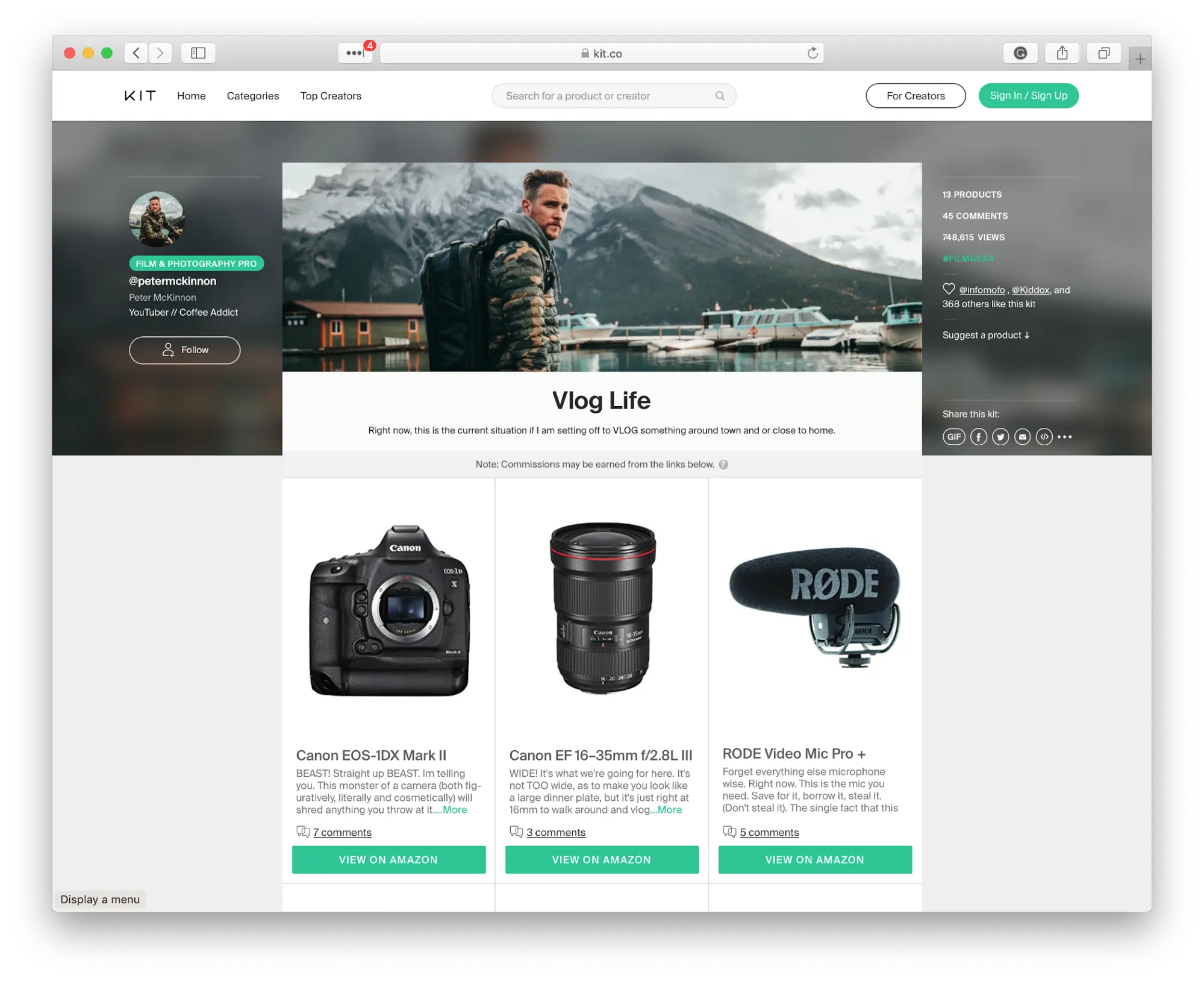
You can do that across your website, blog, and social media. You can also do that with Kit, a newer social media platform specifically designed for curating and sharing products with an emphasis on affiliate marketing.
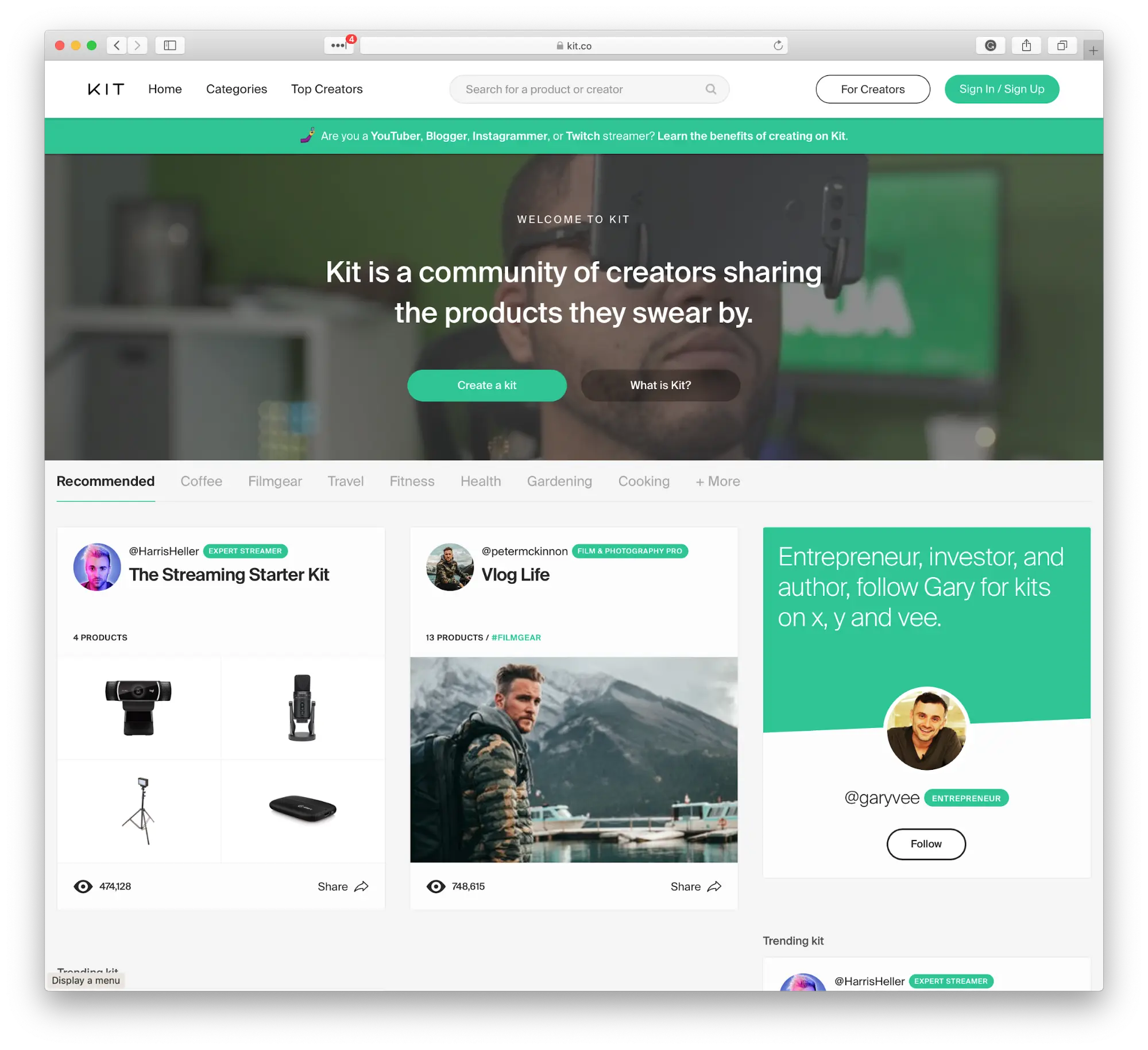
Expanding your product curation efforts past your current digital properties, and onto Kit, allows you a concise way to bundle products for your audience as well as allows you to be discovered by consumers looking for exactly the types of products in your area of expertise.
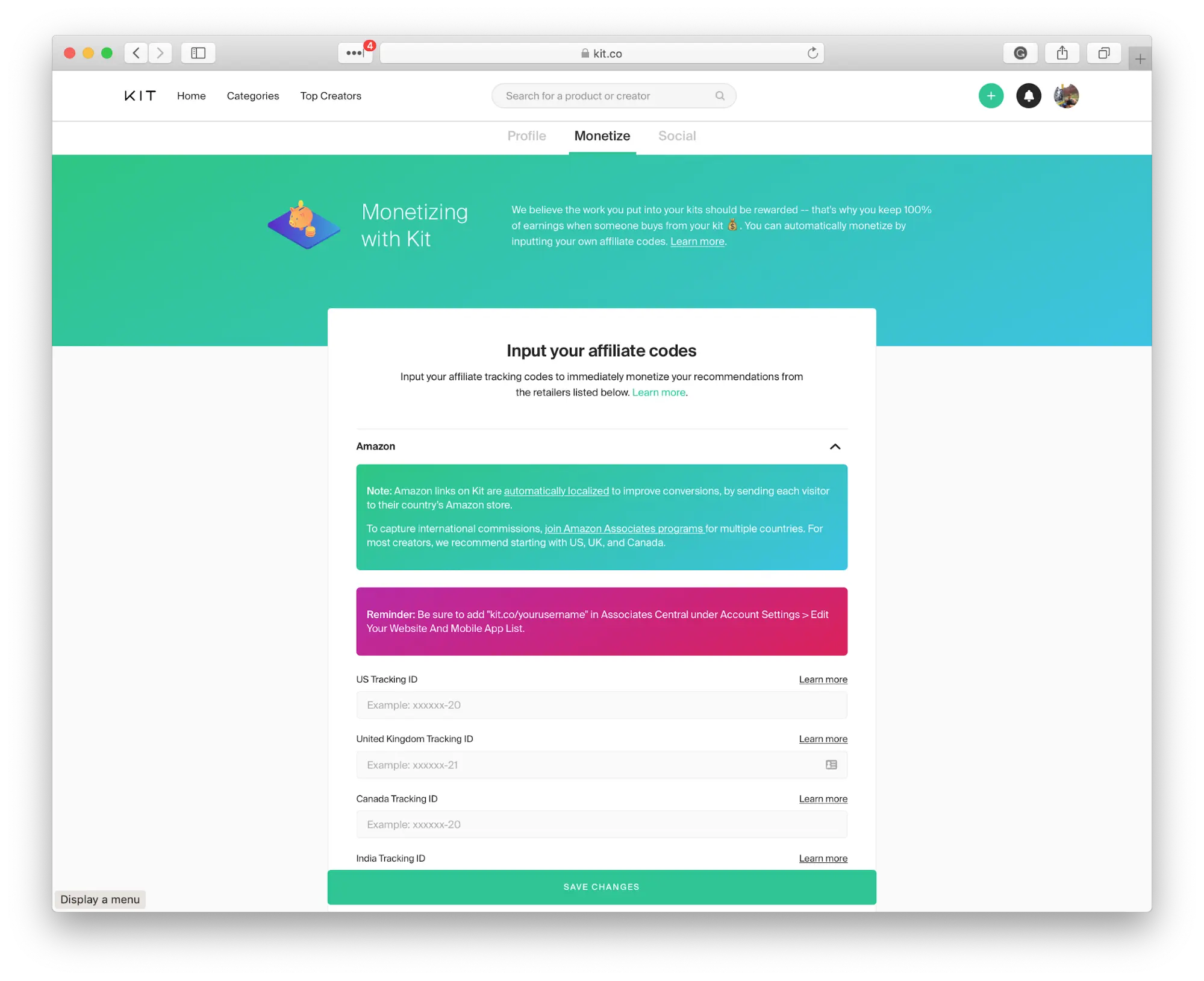
The Kit dashboard also allows you to add in your affiliate tracking information for the majority of Amazon's affiliate programs world wide so that your recommendation's links to Amazon will include your affiliate tracking IDs. This is a great opportunity to create new tracking IDs so you can compare the performance of Kit to your existing properties and marketing campaigns.
As Kit now lives in the Geniuslink family (we acquired it in late 2019), we'll be sure that Kit's support for the Amazon affiliate program, and a global audience, are top notch!
Exit your Amazon affiliate business
While setting up your Amazon affiliate website to be a long-term, sustainable, and passive income business is often the goal, you may find the ultimate -- and best -- payout is when you sell it!
There is absolutely nothing wrong building up an Amazon affiliate-focused website, getting it to a certain size in terms of traffic or affiliate commissions, and then letting it coast while you focus on other things. But just like we discussed above with link health and declining commission rates, you may find that your "passive" business is not really passive. Add in other factors like Google's regularly changing search engine algorithm updates, Facebook's tweaks and friendliness towards external links, or YouTube's head scratching moves, and you may find that momentum often dies quicker than you'd like.
Often the best move for your Amazon affiliate business, after you've put the time and effort into it that you feel is right, is to sell it.
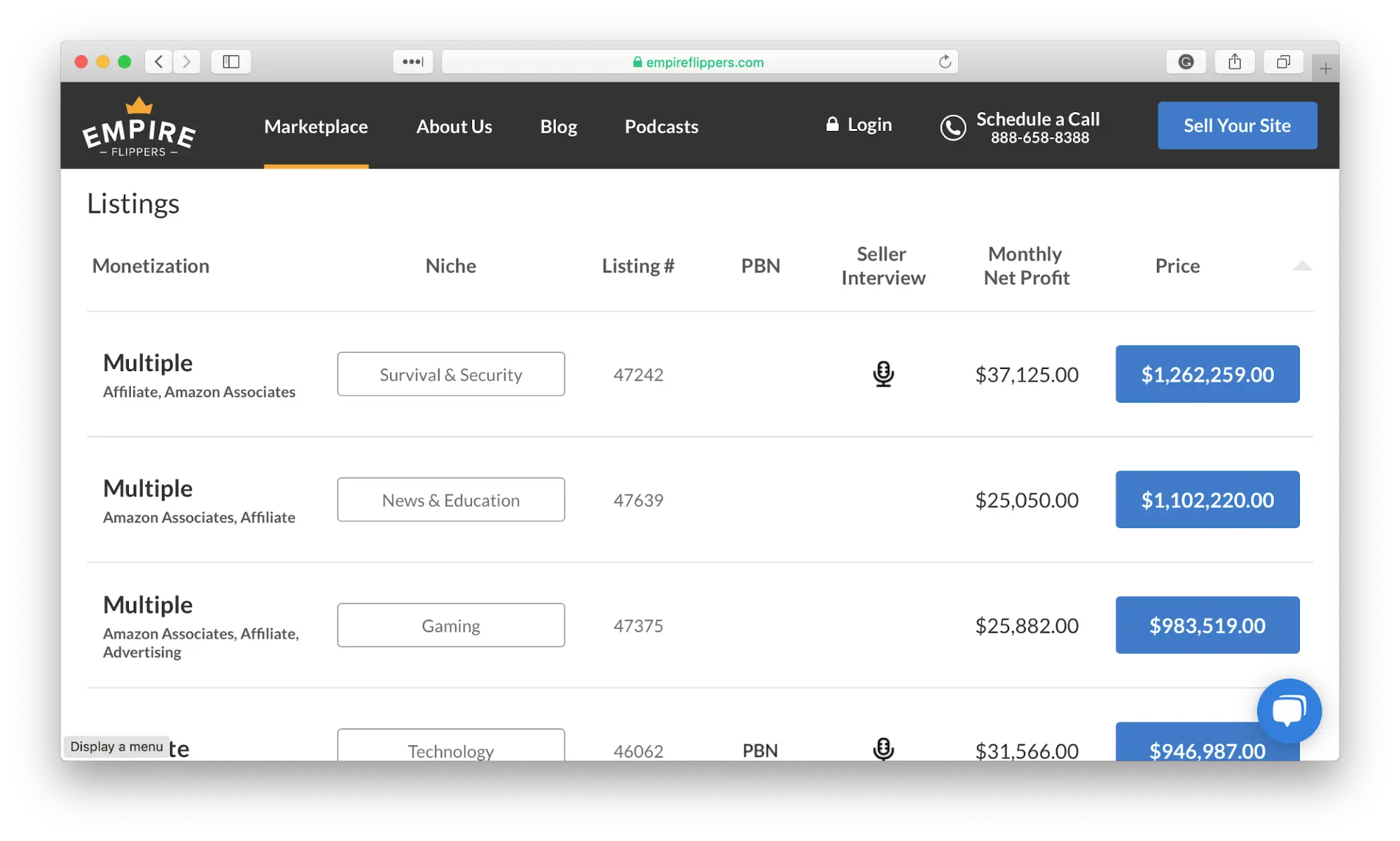
Amazon is perfectly fine with you selling your digital properties, but they do have some concerns around allowing secondary-user access into your Associates account, and you are not permitted to sell your Associates account. Rather the buyer of your site should create their own Amazon affiliate account then replace the tracking ID on the affiliate links in your site to theirs (Geniuslink makes this super easy!).
Amazon affiliate websites are often priced at a "multiple" of what your monthly affiliate revenue is. Often this is around 20x (+/- 5) but varies depending on multiple factors. A good broker can help you navigate these waters.
As with any business an entrepreneur builds, it becomes their baby. And while hard to say goodbye, the ultimate milestone for the entrepreneurial journey is exiting the business.
Good luck!
As the former Global Product Manager for the iTunes Affiliate Program at Apple, and consultant to the Microsoft Store Affiliate Program, Geniuslink co-founder and CEO Jesse Lakes has seen his fair share of affiliate programs from both the advertiser and publisher perspectives. He's also learned hard lessons, often first hand, about which affiliate programs to commit to and when. He's shared these lessons and experiences via frequent onstage presentations at the top affiliate conferences, numerous interviews for print, podcasts, and digital periodicals, and is a regular contributor to the Geniuslink blog.